Sunday, October 20, 2019

"Bad Blood: Battling Cancer in the U.S. and Vietnam" - An Interview with Michelle Hermiston, Ph.D. M.D. of UCSF

By Shoshana Harlem (MSS Intern, Terra Linda High School) 

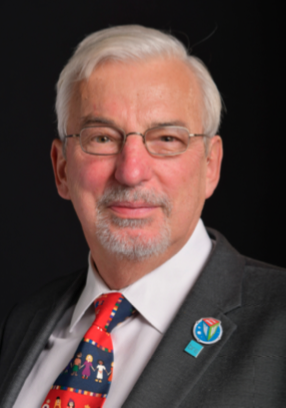
Dr. Michelle Hermiston,  M.D. Ph.D. is director of the pediatric immunotherapy program at UCSF. She studies blood cancers in children and also works in Vietnam developing infrastructure for pediatric oncology.


  1. What made you interested in doing cancer outreach work in Vietnam? 

I am passionate about curing children with cancer. The cure rates for children with cancer in the United States is approaching 85% due to advances in basic research and clinical trials. However, 80% of children with cancer live in low or middle income countries (LMIC) where outcomes range from 5-40%. 


   2. What infrastructure have you already developed in Vietnam for children with cancer and other blood diseases? 

Our team at UCSF Benioff Children's Hospitals Oakland and San Francisco have been working with an international team of investigators to improve childhood cancer outcomes. We are using an implementation science approach. So far, we have performed a needs assessment involving all hospitals nationally that care for kids with cancer. Out initial interventions have focused on education, establishing a platform for kids with cancer. Our initial interventions have focused on education, establishing a platform for data collection for quality improvement and eventual clinical studies purposes, and development of uniform treatment protocols. 

   3. What is your role of the director of the pediatric immunotherapy program at UCSF? 

I oversee the development and implementation of our pediatric immunotherapy program. I am the principle investigator for several chimeric antigen receptor t (car-t) cell trials and oversee the care of these patients. 

   4. What are the best parts of your job? 

There is nothing better than curing a child of cancer and giving them a second change at life. No two days are the same. I have the privilege to work with an amazing interprofessional team. The children and their families I care for are inspiring and strong. I get to learn something new every day and be at the forefront of new technologies. I get to take this knowledge to a LMIC setting where I have the opportunity to improve outcomes for even more kids. 

   5. What are the hardest parts of your job? 

The hardest part is when a child's cancer is smarter than our best science. Our work is not done until we can cure every child, no matter what zipcode they happen to randomly be born into. 

Want to learn more about Michelle Hermiston and cancer? Join us on Wednesday, October 9, 2019 at Terra Linda High School from 7:30 PM - 8:30 PM in Room 207!


Sunday, September 29, 2019

Virtual Reality, Augmented Reality, Artificial Intelligence, 3D Animation, and Einstein's Theory of Gravity

  By Shoshana Harlem, Terra Linda High School
http://marinscienceseminar.com/ai-vr-3d-amazing-applications-for-understanding-physics-with-david-levitt-ph-d-9-25-19/


Headsets are used in virtual reality.

     Virtual reality is when a computer generates an artificial simulation. By simulating a person's vision and hearing, virtual reality makes a person feel like they are experiencing the video game firsthand. To experience virtual reality, people wear a headset. There are two main reasons why people use virtual reality. One is for entertainment and gaming (E.g.: computer and video games, 3D movies) because it helps create and enhance an imaginary reality. Virtual reality is also used to help train for real-life situations by creating a simulation. This helps people be able to practice the situation beforehand, and therefore be prepared if and when the situation comes up in real life. Pilots often use flight simulators to train for real-life situations.

Augmented reality
     Augmented reality is a technology that uses computer-generated enhancements in order to give people an opportunity to interact with the situation. Augmented reality is used in apps and electronics. It is used in many situations such as to display the scores on sports games, have 3D emails pop out, along with phones and text messages on electronic devices. People are also using augmented reality to create motion activated commands on electronics, such as Iphones.

Artificial intelligence 
     Artificial intelligence is an area of computer science that creates machines that work and function like humans. It runs smart machines. Artificial intelligence is used in everyday lives such as SIRI, google search, and even self-driving cars. People have conflicting views on artificial intelligence and often debate whether it is safe. Artificial intelligence is good because it helps people complete tasks in their daily lives, which saves people time and energy. Another reason why artificial intelligence is good is because it helps people with disabilities such as helping visually-impaired people or people with hearing impairments with translations. For people who can't communicate that well, artificial intelligence can provide communication technologies. On the other hand, some people argue that artificial intelligence is not good because sometimes it fails and can land people in dangerous situations. For instance, a self-driving car might not see another car when merging into a lane and might therefore cause an accident.

3D animation helps explain Einstein's Theory of
Gravity. 
     3D animation can help people see Albert Einstein's Theory of Gravity. Einstein visualized that gravity is not a force and instead is a curvature of time and space which is caused by energy and mass. Einstein said that gravity and acceleration are the same thing. Meanwhile, Isaac Newton thought that gravity was separate from acceleration. 3D animation allows people to run physics experiments to test Einstein's theories. The physics experiments show how gravity works, where people's weight comes from, and the effect of mass.

     To learn more about virtual reality, augmented reality, artificial intelligence, 3D animation, and Einstein's Theory of Gravity, come to the Marin Science Seminar at Terra Linda High School in room 207 on Wednesday, September 25. David Levitt of Pantomime Corporation will be speaking. Join us and learn!

Sources:
1. https://www.augment.com/blog/virtual-reality-vs-augmented-reality/
2. https://futureoflife.org/background/benefits-risks-of-artificial-intelligence/?cn-reloaded=1
3. https://www.techopedia.com/definition/190/artificial-intelligence-ai
4. https://www.itu.int/en/mediacentre/backgrounders/Pages/artificial-intelligence-for-good.aspx
5. https://medium.com/@davidlevitt/the-secret-truth-about-gravity-f33f69eba7ef
6. http://discovermagazine.com/2019/may/how-to-understand-einsteins-theory-of-gravity

Sunday, September 22, 2019

AI, VR, & 3D: Amazing Applications for Understanding Physics


Marin Science Seminar for Teens & Community presents a free event:

AI, VR, & 3D: Amazing Applications for Understanding Physics” (plus learn about Swift mobile software development) with David Levitt of Pantomime Corp.

Date: Wed. September 25th, 2019; 7:30 – 8:30 pm at Terra Linda HS in San Rafael, Room 207

Dr. Levitt will present on augmented/virtual reality and Artifical Intelligence, and will show how 3D animation helps us visualize Einstein’s theory of gravity. He will also give a pep talk about becoming a self-taught Swift mobile software developer.

Dr. David Levitt is a cognitive scientist, artificial intelligence researcher, virtual and augmented
reality innovator, mobile software developer, entrepreneur, physicist and writer. He was on the founding team of the MIT Media Laboratory, on the team at VPL Research that created the first commercial virtual reality systems, and he was a co-founder of Atari research laboratories. Levitt’s doctoral thesis ‘A Representation for Musical Dialects’ includes algorithms for classical and jazz composition and improvisation, such as piano arrangements in Fats Waller’s style. Levitt holds patents for inventions in virtual and augmented reality, and intelligent media processing software. He earned his doctorate in Artificial Intelligence at MIT and his BS in Engineering and Applied Science at Yale. Prof. Levitt has taught at MIT, NYU and SRJC.

Sunday, September 15, 2019

Fall 2019 Marin Science Seminar schedule

Marin Science Seminar - Fall 2019

Join us and Learn!  Please share if appropriate. We have targeted extra credit forms available at all sessions. We will send out a more detailed email about the talks before each presentation. More details can be found at marinscienceseminar.com.
SEPTEMBER 2019
  • 20:  MSS internship application deadline
  • 25: "AI, VR, & 3D: Amazing Applications for Understanding Physics" (plus learn about Swift mobile software development) with David Levitt  Sci.D. of Pantomime Corp.
OCTOBER
  • 9: "Bad Blood: Battling Cancer in the U.S. and Vietnam" with  Michelle Hermiston Ph.D. M.D. of UCSF
  • 16: "How Dangerous are Microwaves? The physics behind non-ionizing radiation and a tale of two books titled 'Zapped'" with Warren Wiscombe Ph.D. of NASA Goddard
NOVEMBER
  • 6: "Let's Learn About Lysosomes!" with Gouri Yogalingam Ph.D. of BioMarin, Novato
  • 13: "Star Clusters: Many-Body Gravitational Laboratories" with Nicholas Rui, UC Berkeley
  • 20: "Adventures of a Plant Ecophysiologist: Studying How Tropical Forests Survive Drought" with Roxy Cruz Ph.D. candidate, UC Berkeley Dawson LabF

Sunday, February 10, 2019

The Deep Roots of Climate Skepticism with Warren Wiscombe PhD


Title: “Merchants of Doubt: The Deeper Roots of Climate Skepticism ” with Warren Wiscombe of NASA-Goddard

Date, Time, Location: Wednesday, February 13th, 2019; 7:30 – 8:30 pm at Terra Linda HS in San Rafael, Room 207

Description:  Climate skepticism often appears superficial — just lazy people who have anointed themselves “climate scientists” without putting in the work required to earn that title.  But there is more to it.  We dig below the surface to uncover the roots of the phenomenon in the 1980s.  After the fall of the Soviet Union and the turn of China toward capitalism, a group of Cold Warrior scientists with no communists left to fight turned their fire instead on environmentalism (which in their minds equated to “big government and regulations”).  These people were strongly rooted in “free-market fundamentalism”, an economic philosophy going back to Friedrich Hayek in the 1940s.  Their rise coincided with that of Ayn Rand and her dramatizations of the woes inflicted on entrepreneurs by socialism. The movement had the backing of powerful, wealthy interests who founded and funded a dozen or more “institutes” devoted to spreading doubt about any science that might lead to government regulations.

Dr. Warren Wiscombe has done research in climate science since its birth in the early 1970s. He worked 30 years at NASA Goddard Space Flight Center, and before that in the Climate Section of the National Center for Atmospheric Research. He taught climate and atmospheric science in several countries and universities. His interest turned to exoplanets in his last few years at NASA. 

RSVP on Facebook here.
Links:

Thursday, January 10, 2019

Green Building with Barry Giles CEO of BREEAM - Wed. 1/16/19

Green Building with Barry Giles of BREEAM

Title: “Green Building Standards: How to Make Existing Buildings Healthier and Better for the Environment” with Barry Giles of BREEAM

Date, Time, Location: Wednesday, January 16th, 2019; 7:30 – 8:30 pm at Terra Linda HS in San Rafael, Room 207

Description:  Most of us spend about 90 percent of our time inside buildings of one sort or another –homes, offices, schools, or shopping centers. Despite the best endeavors from those involved in building design, construction and operations, buildings have a mostly negative effect on our health and well-being as the occupiers and on the environment. Climate change will have a major effect on how efficient buildings can be – or if they will even stand up to extreme weather events.
While we could just demolish all the existing buildings and start again, that’s not practical. So what can we do to increase our health and well-being and make buildings more resilient? How can we turn all the ‘ugly ducklings’ into ‘swans’.


Barry Giles, CEO of BRE America
Barry Giles has worked in virtually every aspect of the building industry —engineer, general contractor, systems operator and facilities supervisor. He helped the US Green Building Council create the LEED Operations and Maintenance rating system for existing buildings in 2003, and from that gained LEED Fellowship and an iconic status in the green building industry. In 2016 he was appointed CEO of BRE America to bring the BREEAM standard to the USA. BREEAM was the original green building rating system and today is the most widely used program worldwide with over 2.2 million registered buildings and over 560,000 certifications.

RSVP on Facebook here.

Links:

Tuesday, January 8, 2019

"The Higgs Boson" - An Interview with Heather Gray, PhD of UC Berkeley and Lawrence Berkeley Labs

By Shoshana Harlem (MSS intern, Terra Linda High School)

Heather Gray is an Assistant Professor at UC Berkeley/Lawrence Berkeley Lab. Her main area of study is the Higgs Boson, but she also focuses on studying silicon pixel detectors and algorithms.


Heather Gray PhD
Heather Gray 

1. What made you want to study the Higgs Boson? 

I came to study physics somewhat by chance, but as soon as I heard about particle physics, it was immediately obvious to me that this is something that I find extremely interesting and wanted to study. When I finished my PhD, we were collecting lots of data and I wanted to look for the Higgs boson because it's an important particle and was the only particle missing from the Standard Model.

2. What are the best parts of your job?

 There are many great parts about my job. The privilege of being able to understand deep questions about how the universe works is probably the best. I also get to work with smart people from all over the world and to travel to interesting places.

3. What are the worst parts of your job?

Not much, but if you push me, I guess I'd have to say too many meetings.

4. What is the Higgs Boson?

Higgs Boson particle
The Higgs boson is a particle that is thought to be responsible for particle masses. It was first predicted back in the 1960s and discovered by my experiment (ATLAS) and another one (CMS) only in 2012. We collide protons traveling at close to the speed of light and destroy them to use that energy to produce Higgs bosons. The Higgs boson is very unstable and decays almost immediately to other particles in the Standard Model.

5. What current research are you working on?

Right now I'm working to study how the Higgs interacts with quarks. In the Standard Model, the Higgs is predicted to interact with all particles that have mass and for the strength of the interaction to be proportional to the particle mass. The quarks have a wide range of masses so this makes them particularly interesting to study to try to understand if this particle that we've discovered is the Higgs boson as predicted by the Standard Model. 

Want to learn more about Heather Gray and the Higgs Boson? Join us on Wednesday, January 9 at Terra Linda High School from 7:30 PM - 8:30 PM in Room 207!


Interview with Irfan Kathiriya: How to Make or Break Your Heart

By: Sahiti Namburu School: Terra Linda High School Dr. Kathiriya is a pediatric cardiac anesthesiologist and Professor of Anesthesia at t...

About Us

Marin Science Seminar is a one-hour science lecture/presentation with a question and answer period open to all interested local teenagers, educators and community. Seminar sessions are held 12 Wednesday evenings during the school year, from 7:30 to 8:30 pm in the Innovation Hub at Terra Linda High School, 320 Nova Albion Way, San Rafael. Seminar speakers are scientists, mathematicians, engineers, physicians, technologists and computer programmers. The topics presented are in a specific area of the speaker’s expertise, geared to interested high school students.