Showing posts with label research. Show all posts

Sunday, June 2, 2024

5 Ways Big Data can Help us

 by Lorena Salvado, San Marin High School 

Data storage centers


Big Data, or large data sets are used to train machines and programs (using specific algorithms) to identify and solve problems in our world. Many machine learning algorithms focus on identifying images and recognizing early symptoms of many illnesses, helping patients and doctors alike. Many other algorithms work around predicting our voting and economic futures- each equally important. All of these algorithms are fueled by large data sets, or Big Data, which help train the machine ( or AI) and help it in making more accurate predictions and decisions. 

Many researchers, such as Abby Smith who came to Marin Science Seminar and talked about the benefits of Big Data in her talk :“Data Science for Social Good”, use these algorithms to predict and help marginalized communities. These data collections and datasets help many other organizations in determining help to deliver as well as keeping track of the issues within these communities. 

So, given that there are many opportunities to help using Big Data, here are 5 different and positive ways Big Data is being used to help those who need it. 


1. Tracking and Helping the Homelessness Crisis

One of the main projects Smith worked on, was a predictive and preventative program for individuals that were at close future risk of homelessness in Allegheny County. Her work involved taking data from numerous individuals as well as taking previous homelessness data and patterns and applying it to the current situations. From these programs she can understand who is at a higher risk of near homelessness, and from there the Allegheny County Department of Human Services could intervene and further help these people. This was a very impactful project as it helped many people that were at risk of homelessness. 

2. Local data for Local people 

The Native BioData Consortium (NBDC) is a database run by Native Americnas focused on gathering information about Native Americans. This big data ranges from public healthy COVID-19 surveillance and tracking to the study and documentation of chronic diseases and effects of medicine. This research and data helps foster trust within these communities as well as incorporate more aspects of their lives into science (by incorporating biological, ecological, sociological factors into the data alongside the data itself). It is also used to encourage and teach future Native American scientists and improve their tribes and communities. 

3. Language Preservation and Research 

Language preservation has become a big issue in the recent decades. As predicted by UNESCO, 90% of the world’s languages could disappear within the next 80 years. This means that many small indigenous communities will lose their languages, due to assimilation or benign overtaken in importance and significance by outside cultures and languages. Languages are a very important part of culture, with many aspects of the culture being carried by the spoken or written language. To preserve these languages many have launched large Data Science for Good projects, such as Google’s Wallaroo project. These projects collect large data about endangered languages, their syntax, their phonetic sounds, and their cultural importance. Documenting these endangered languages helps us preserve our cultures and use machine learning algorithms to teach it back to future generations, or simply to understand the language patterns better. Another example of language preservation can be seen in the work done for extinct languages. For example, many Native American languages were lost due to colonization and years of forced assimilation. Many of these languages did not have written forms for us to historically trace back and find. Many language based algorithms are using the little oral data that there is on these languages to predict and “fill in” ( phonetically, grammatically ect) what these languages might have sounded like. This helps many historians and Native communities as they have better chances at recovering their languages and cultures. 

4. Track and prevent Avian Influenza Risk 

During the 2020/2021 Avian influenza outbreak, a team in Korea decided to make a large database containing cases of avian influenza as well as its early stages. This data was later used in many algorithms across the country to help identify and track cases of avian influenza, which helped mitigate the infections and the effects of the illness. Today, with a widespread outbreak of avian influenza going around - with cases even spreading outside of the avian world ( such as cattle and even humans now ! ) large data and algorithms like these are needed. By having a lot of information on the patterns and spread of illnesses, we can better protect our own communities and lessen their spread . 

5. Help Businesses target their consumers better

This is by far one of the most widespread uses of Big Data in our current, modern world. Many businesses ranging from social media platforms, to small business, to large companies all seeking to advertise and adapt to their consumer base  use some sort of data collection systems to keep track of their consumericus. Many businesses have a certain demographic of people in mind to sell their products to ( ex: A business selling paints will want to market their products to other painters or artists looking for paint ) and collecting big data about individual users on platforms or internet browsing helps these businesses target their advertisements in a more accurate way. 


From preventing and tracking homelessness factors, to helping businesses run smoothly and make more profit, to predicting and keeping track of global diseases and preserving and predicting historical and lesser spoken languages, big data and algorithms play a huge role in our world. More and more data is produced every day, and every machine learning algorithm becomes more accurate and more efficient than the last one. These crucial algorithms can help not only our world, in the domains of business, finance, and homelessness, but also the world that we live in, tracking avian flu cases, and predicting natural disasters or helping spaceflights run smoother. And of course, these are just some of the ways that large data sets can be used to help people and improve algorithms. A few more examples can be seen in depth in Abby Smith’s talk at Marin Science Seminar, which can be seen here : "Data Science for Social Good" 

More information on Abby Smith’s work: https://marinscienceseminar.com/data-science-for-social-good/  , https://abbylsmith.me/  ,https://www.dssgfellowship.org/

Visit our future Marin Science Seminar talks on the official Marin Science Seminar Website : https://marinscienceseminar.com/


Monday, May 20, 2024

"Getting a Grip on Geysers"- An Interview with Mara Reed

by Lorena Salvado, San Marin High School 

Geysers are one of the most fascinating geological phenomenons- with only a few 1000 on our planet, each requires specific conditions of magma streams, water, and geological networks to work. Most of today's geysers were formed 14,000 years ago- after the last glacial era of our planet. They operate under very intricate conditions-with lots of mystery around their exact workings, which is why Mara Reed became intrigued by them. Reed is a Ph.D. candidate at UC Berkeley's Department of Earth and Planetary Science, and she works at geyser sites - mainly in Yellowstone National Park- spending her days researching and collecting data. She came to Marin Science Seminar on Wednesday February 7th, 2024 and gave a talk about the current research concerning geysers as well as their importance. In this interview, she will share a few tidbits about her work and give some advice. 

A picture of geologist Mara Reed, she is out in nature near some mountains wearing a yellow and blue beanie.
Mara Reed
What is your favorite geyser hike?

I enjoy hikes to the edge of Shoshone Geyser Basin in Yellowstone’s backcountry. If you hike in June or July, you’ll see incredible wildflowers along the way. It can be done as a long day hike (18 miles round trip) but most people choose to backpack. The trail passes by some interesting geyser formations. Just be sure to stay on the path, for your safety and the protection of the thermal features.


How much of your time is spent out in the field versus in the lab, which part do you like more?

I actually do my best to stay out of the lab! Most of my work involves spending just a couple weeks in the field every year, and then spending the rest of the time managing, analyzing, and writing about the field data. I find the lab work that relates to water chemistry or rock properties very “fiddly,” and would rather be outside.

How does geothermal energy collection affect geysers (In Iceland or other locations)?

There is almost always a negative effect, whether from large scale power production (like in Iceland and the US) or from smaller scale heating (like in New Zealand). Geysers need water and heat to operate, and geothermal wells can take both of those things away. The US once had a few geyser fields in Nevada, including significant ones at Beowawe and Steamboat Springs, but geyser activity declined and then ceased after geothermal power production started. I think geothermal energy is necessary if we want to get away from fossil fuel reliance but I do hope the world’s remaining geyser fields stay protected.

Do you think that knowledge of geysers on planet earth could affect our developments or research on other planets ( i.e. Mars or the Moon)?

We do find geyser-like features on other solar system bodies, including Enceladus (moon of Saturn) and Europa (moon of Jupiter), but we think they  form and operate differently than geysers on Earth. I think hydrothermal areas and geysers are good laboratories to study how life lives and even thrives in extreme environments. We now know that there are microorganisms that live directly inside Old Faithful Geyser’s vent, which is pretty incredible. Understanding the present day life that exists in these environments can help us understand how life formed on our planet and where we might look for life elsewhere in the solar system.

How can the public help with geysers or geyser research?

We are very fortunate to have the world’s most concentrated geyser field in our backyard. The biggest thing people can do is to be a good steward of these areas. For visitors to Yellowstone, that means following the rules—keep to the trails and don’t mess with the geysers. It’s not just a safety thing. Geyser formations and bacteria mats are extremely delicate. Damage can be permanent. For anyone really interested in geysers and contributing to geyser monitoring, I would recommend reaching out to the Geyser Observation and Study Association (GOSA) for resources and tips on getting involved. Most geysers are still not monitored by scientific equipment, so visual observations of geyser activity are still a very important resource for scientists.

What's a piece of advice you would give to someone wanting to pursue a career in geyser research?

Since geyser science intersects with many different fields, it’s helpful to have a broad knowledge base. A solid foundation in physics, chemistry, and hydrogeology will serve you well. For those interested in pursuing scientific research in general, there are many opportunities at the college level. Some universities have strong undergraduate research programs (this is something to think about when choosing where to apply to college), but you can also apply for Research Experiences for Undergraduates (REU) programs where you can get paid to do research, usually over the summer at a certain university. Early exposure to research helps you figure out if you like doing it and what research questions interest you. 

A pictue of a geyser ( called Lion Geyser) taken by Mara Reed during a sunrise.
Lion Geyser picture by Mara Reed 

You can watch Mara Reed's Marin Science Seminar presentation here, "Getting a Grip on Geysers" with Mara Reed, Ph.D. candidate at UC Berkeley’s Department of Earth and Planetary Science

You can learn more about Mara Reed and her work here : https://www.marareed.com/

As well as check out her awesome photography here : photography  

License for all photos used : license 

And additional information used in this article can be found here , "USGS How do Geysers Work

Wednesday, November 30, 2022

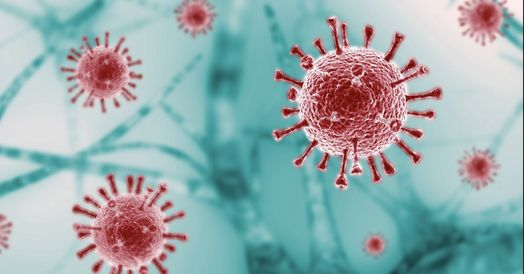
Covid-19 and Long COVID: Rapidly Developing Therapies for a New Disease

 On November 30, 2022 Art Wallace presented studies and statistics on a new disease, Long  COVID.

Art Wallace, MD PHD
Art Wallace, MD PHD


Art Wallace introducing himself!

He explained the problems with Covid variants and why Long COVID presents negative long term effects.
Explaining their research objectives!


Learn more about Covid-19 and Long COVID at Marin Science Seminar!

Wednesday, November 9, 2022

I'm a Botanist (and unfortunately I don't know why your succulent isn't flowering!)

 On November 9, 2022, Dr. Sarah Jacobs came to Terra Linda to share the field work and responsibilities of a Botanist.

Texas Indian Paintbrush

Dr. Jacobs starts the presentation with a story of how she became a botanist.

Steps to becoming a botanist

Dr. Jacobs explains the role of a systematic botanist and museum scientist and how they collect data from the field to classify plants.

Systematic botany
Systematic botany

To learn more about Botany and the best parts of it visit Marin Science Seminar!

Thursday, February 27, 2020

"CSI Humpbacks: Decoding Whale Scars" - An Interview with Allison Payne of San Francisco State's Estuary and Ocean Science Center

by Shoshana Harlem, Terra Linda High School

Allison Payne is a graduate school researcher who works at the Hines Lab at San Francisco State's Estuary and Ocean Science Center. She also is a researcher for the Marine Mammal Center Cetacean Field Research Team and a naturalist for San Francisco Whale Tours. For her thesis, she is studying scarring on humpback whales and how it affects their interactions with other species.


1. What made you interested in studying humpbacks?
Humpback Whale
I grew up in Dana Point, California - a place that recently trademarked the phrase “Dolphin and Whale Watching Capital of the World.” Growing up so close to the ocean meant that there were tons of opportunities for me to interact with the ocean from a young age. I have a journal entry from when I was in kindergarten where I talk about seeing dolphins while walking at the harbor and how it made me want to be an “oshin ograffer”. 
As I got older, I started to focus on other things. I was particularly interested in brains, cognition, and consciousness. I started my undergraduate degree in Cognitive Science at UC Berkeley, but wasn’t sure exactly what I wanted to do until I took a class called Animal Cognition. 
I was engrossed by the research, theories, and stories presented to me in that class. I couldn’t stop thinking about how other animals might perceive the world and how the differences might manifest in their experiences, communications, and relationships. I got involved with Cal Squirrels to study the abundant fox squirrels on campus and realized that field research was definitely for me. I loved solving tactile problems, being outside, and hanging out with animals. 
While studying squirrels, I started thinking about what animals I’d like to study long term. Pondering this led me to think about all the mysteries of whale brains and behaviors. Cetaceans have been evolving separately from us for over 60 million years, but in many ways we are very similar. The fact that I could see parallels between us in everything from neuroanatomy to culture was thrilling. That’s when my love of whales came full circle and I decided to pursue whale research as a career. 

2. What can a person find out about a humpback whale from their scars?
Scars tell stories about where we’ve been and what has happened to us. For whales, that means we can see when they get in fights with each other, when they encounter predators, or when human activities like boating or fishing impact their lives. Just like at a crime scene, we can use scars as evidence and work our way backwards to find out what happens to whales when there are no humans around to see them. 

3. What are the best parts of your job? What are the hardest parts of your job?
The best part of studying whales is, of course, the field work. Being out on the water is hard and thrilling work. I love working on boats, collaborating with locals, and seeing amazing natural displays. 
In my work, I often interact with the public, especially when I guide whale watching tours. Education can sometimes be the hardest part! I remember at one point last year I was on the San Francisco Whale Tours vessel Kitty Kat, and we were watching several humpback whales just outside the Golden Gate Bridge. 
When we first saw the whales, they were several hundred yards west of us. I knew we had an incoming tide, a western wind, and lots of anchovies underneath us, so rather than approach the whales, I chose to have the captain put the boat in neutral and wait for the whales to come to us. 
This wasn’t a popular decision with some of the passengers, several of whom insisted that we move closer. I started to explain to them that whales should be treated just like any other wild animals and the best way to gain their trust is to be quiet and not make sudden movements. However, I was interrupted by the giant sneeze-like sound of a humpback whale spouting only feet from our boat! 
It was pretty satisfying to see the same passengers who had been pouting become excited and awed as they got faces full of whale snot. The humpback circled around our boat, eventually giving us a beautiful fluke dive only 10 yards away. Choosing to give the whales the opportunity to come to us gave us a beautiful, safe, and ethical encounter with these gentle giants. And it all happened with the iconic Golden Gate Bridge in the background - pretty special!

4. What advice would you give to people who want to study humpbacks?
Get involved in research projects as early as you can. Try out all kinds of research - from pipetting in the lab, to counting animals in the field, to writing computer programs to analyze data. It doesn’t matter if the lab closest to you studies otters and you love belugas - just start somewhere. Maybe you’ll discover a love for plankton or coral and end up on a completely different path than you thought!
Some of my most valuable and formative career experiences were the learning experiences I had in different labs I volunteered in during college. It helped me figure out what I like and make connections with professionals who still support and advise me today. 

5. What current projects are you working on?
I’m currently working on my Masters thesis with San Francisco State’s Estuary and Ocean Science Center. I’m studying humpback whales who become entangled in fishing gear off the Central Californian coast. I am looking at tons of photos of these whales to see if they have scars left from being caught in the gear.

Want to learn more about Alison Payne and humpback whales? Join us on Wednesday, March 4, 2020 at Terra Linda High School from 7:30PM-8:30PM in Room 207!

Interview with Irfan Kathiriya: How to Make or Break Your Heart

By: Sahiti Namburu School: Terra Linda High School Dr. Kathiriya is a pediatric cardiac anesthesiologist and Professor of Anesthesia at t...

About Us

Marin Science Seminar is a one-hour science lecture/presentation with a question and answer period open to all interested local teenagers, educators and community. Seminar sessions are held 12 Wednesday evenings during the school year, from 7:30 to 8:30 pm in the Innovation Hub at Terra Linda High School, 320 Nova Albion Way, San Rafael. Seminar speakers are scientists, mathematicians, engineers, physicians, technologists and computer programmers. The topics presented are in a specific area of the speaker’s expertise, geared to interested high school students.