Showing posts with label climate change. Show all posts

Wednesday, October 9, 2024

When Tides Turn: Embracing Change in California’s Wetlands - an Interview with Julie Gonzalez, Ph.D

By Maddie Leung, Redwood High School

California boasts 2.9 million acres of wetlands, with 90% of the remaining tidal wetlands in the San Francisco Bay1. Wetlands are some of the most dynamic and essential ecosystems on the planet, supporting biodiversity, filtering water, and helping combat climate change by acting as powerful carbon sinks. But as sea levels rise and invasive species spread, these habitats face mounting pressure. Dr. Julie Gonzalez, who earned a Ph.D. from UC Davis in Ecology, is researching how these ecosystems adapt to climate change and how we can protect them. In this interview, she shares what makes wetlands so fascinating, the biggest challenges they face in Marin, and how we can all play a role in their preservation.

Dr. Julie Gonzalez

1. Wetlands play a crucial role in supporting biodiversity and protecting our environment. What aspects of these ecosystems do you find the most fascinating?

I’m amazed by how everything in a wetland is connected. Each part of the system, from the plants and animals to the water and soil, works together and responds differently to environmental changes. My work focuses on figuring out how these systems react to different challenges. By understanding this, we can figure out the best ways to maintain and improve wetland health now and in the future.


2. What are some of the biggest challenges estuaries and wetlands in Marin currently face?

Two big challenges are invasive species and sea-level rise. Invasive species are plants and animals that move into wetlands and can sometimes harm local ecosystem functioning by outcompeting native species. On top of that, sea-level rise is a challenge we have to plan for. Wetlands are amazing at adapting, but these two issues create a lot of pressure. My goal is to study how they affect wetlands to plan for a future where these ecosystems are better protected.


3. Have you observed any changes in the health or size of Marin’s wetlands over the past few years?

Suisin Marsh (Image by Steve Martarano)
Yes! Being part of the wetland science community in San Francisco Bay is exciting because we’ve seen a lot of positive changes recently. Many restoration projects have helped improve the health of wetlands around the Bay. While things like sea-level rise and invasive species can feel overwhelming, it’s inspiring to see how much progress is being made through the hard work of scientists and land managers.

4. You mentioned that the National Estuarine Research Reserve System (NERR) collects data from estuaries and wetlands around the U.S. How is this information utilized to benefit our local wetlands?

The NERR system is a network of wetland scientists and managers all over the country. We share ideas and learn from each other. For example, if a reserve on the East Coast finds a creative way to deal with an invasive species, we can see if that approach would work here in the Bay Area. Similarly, we share our successes so other reserves can learn from what’s working in California.


5. How can the local community get involved in wetland preservation?

There are so many ways for people to help! Organizations like Save the Bay host community events where you can help plant native wetland species or remove invasive plants. These hands-on activities are a great way to connect with nature and make a real difference in protecting our local ecosystems.


You can watch Julie Gonzalez and Becca Moris' seminar here: https://vimeo.com/1022368761


Interested in protecting the wetlands? To get involved with your community and conserve your local ecosystem, visit https://savesfbay.org/


Photo of Dr. Julie Gonzalez from LinkedIn. "Suisin Marsh Overlook" by Steve Martarano is licensed under CC BY 2.0. 

1 GREENING THE BAY FINANCING WETLAND RESTORATION IN SAN FRANCISCO BAY. (2019). Save the Bay.


Friday, September 30, 2022

How the Survival of Elephant Seals is Helping Scientists Research Climate Change

by Samantha Dvorin, Archie Williams High School 

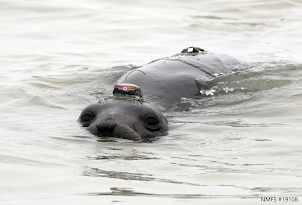
Female elephant seal recording data
(Costa, 2022) 
  

 One marine animal is making a big splash in the scientific community for its assistance in tracking ocean temperature fluctuations using tagged sensors, population data, and migration patterns. The mysterious elephant seals were once some of the most hunted ocean creatures, almost to the point of extinction in the nineteenth century. Their thick layer of blubber was exploited by whalers and hunters and used as an oil source. These animals have made a huge comeback thanks to conservation efforts, awareness, and legal protection, especially in Antarctica and California.

   There are two species of these earless marine mammals, the Northern elephant seal (Mirounga angustirostris) and the Southern elephant seal (Mirounga leonina). The Northern elephant seal is native to California, Baja California, Mexico, and other nearby offshore islands while the Southern elephant seal can be found in sub-Antarctic and Antarctic waters (Moritsch & Lee, 2021). Most elephant seals spend their time breeding on land but living in colder water. Breeding season is an especially intense time for these animals as males fight for dominance and battle to collect a large group of female elephant seals. After the breeding season, they make their way to the water and spend their time migrating in search of food. They spend months at sea searching and diving deep for fish, squid, and similar marine creatures (U.S. National Park Service, 2021).

    Despite defying the odds and repopulating, elephant seals are still left to face the consequences of climate change. As the burning of fossil fuels like coal, oil, and gas continues, marine animals are some of the most affected because they rely on the oceans for their habitat and food. Sea ice provides both a home for aquatic creatures like polar bears, penguins, and seals, but it also affects the temperature of the oceans. Many organisms are being forced to migrate due to warming water; some even have to change their feeding and breeding patterns to acclimate to their new normal. These prolonged water warming events are becoming more common and are referred to as Marine heat waves. The most prolific in recent history is the North Pacific Blob which stretched from 2013 until 2016. It was the longest-lasting and most extensive marine heat wave recorded which caused many elephant seals to migrate toward colder water where they can find better prey. But scientists are using elephant seals to inform the world of the extent of damage done by these heat waves both on the surface and deeper (Wong, 2022).

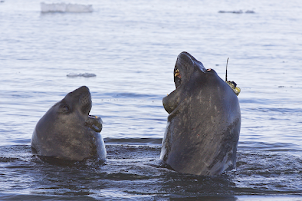
Southern elephant seals with sensors (McMahon, 2016)
    Biologists and ocean scientists at UC Santa Cruz did a study collecting ocean data using tags placed on Northern elephant seals. The seals record depth, temperature, and salinity data that would be otherwise extremely difficult for the researchers to obtain. The seal data collected during the Blob revealed that this ocean-warming event extended deeper into the ocean than once believed, as deep as 1,000 meters below the surface. Marine heatwaves are likely to occur more frequently and severely as temperatures continue to rise worldwide. Understanding these heat waves like the “Blob” will allow scientists to predict their severity, development, and more (Hosler et al., 2022).

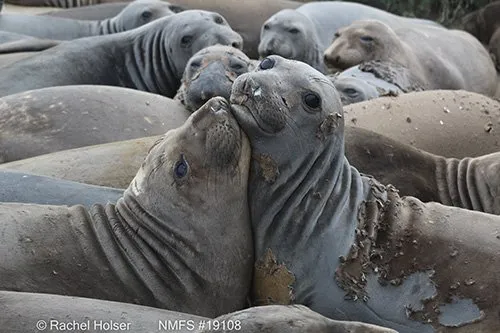
Northern Elephant Seals at Año Nuevo Reserve (Hosler, 2022)
Northern elephant seals are not the only species being used to understand our Earth’s changing climate. In Antarctica, Southern elephant seals are helping scientists track the influence of climate change using sensor-tracking devices similar to the UC Santa Cruz study. Data from the deep diving seals shows that melting ice sheets are disrupting the worldwide food system as the oceans become less salty. This lack of salt is likely affecting the global ocean conveyor belt that transfers heat across the Earth’s seas (McSweeny, 2016). The seals allow scientists to obtain a large range of data patterns as they follow their diverse migration practices. Although once on the brink of extinction, elephant seal populations have bounced back and are now major contributors in allowing scientists to better understand the impacts of climate change on the ocean and marine mammals. 

On September 21, 2022, Ph.D. student Alison Payne presented “Cutting Edge Research on Elephant Seals at Año Nuevo Reserve” at the Marin Science Seminar where she discussed the natural history of elephant seals and the long-term monitoring program at Año Nuevo. Learn more about Alison and her work here.

Works Cited

Herraiz, L. (2016, August 23). Seals help scientists get to the bottom of Antarctic changes. Carbon Brief. Retrieved December, 2022, from https://www.carbonbrief.org/seals-help-scientists-get-to-the-bottom-of-antarctic-changes/

Hosler, R. R., Keates, T. R., Costa, D. P., & Edward, C. A. (2022, July 4). Extent and Magnitude of Subsurface Anomalies During the Northeast Pacific Blob as Measured by Animal-Borne Sensors. AGU Online Library. Retrieved December, 2022, from https://agupubs.onlinelibrary.wiley.com/doi/full/10.1029/2021JC018356

Moritsch, M., & Lee, C. J. (2021). Elephant Seals. National Geographic. Retrieved December, 2022, from https://www.nationalgeographic.com/animals/mammals/facts/elephant-seals

U.S. National Park Service. (2021, May 21). Northern Elephant Seal. National Park Service. Retrieved December, 2022, from https://www.nps.gov/places/northern-elephant-seal.htm

Wong, K. (2022, August 4). Elephant Seals Measure "the Blob" - Natural Reserve System. UC Natural Reserve System. Retrieved December, 2022, from https://ucnrs.org/elephant-seals-measure-the-blob/

Yale Environment 360. (2016, August 24). How Elephant Seals Are Helping Scientists Study Climate Change. Yale E360. Retrieved December, 2022, from https://e360.yale.edu/digest/how_elephant_seals_are_helping_scientists_study_climate_change


Sunday, February 2, 2020

Engineering Rivers and Wetlands for Climate Resiliency

by Shoshana Harlem, Terra Linda High School

Rivers are important because they supply
communities with water, food, and transportation.
     Rivers and wetlands are important. Rivers supply communities with water, food, and transportation.  They carry water from the land to the ocean. In the ocean, the seawater evaporates and that water vapor forms clouds. Then, the clouds carry the moisture and release it as precipitation. This is a process called the water cycle, and this water cycle helps make sure that Earth has a supply of freshwater. This freshwater is essential for all living things. Wetlands are also essential. Wetlands are areas where water covers soil. Wetlands help improve and protect water quality, provide habitats for fish and wildlife, store water to lessen floods, and make sure that the water flows during dry periods of time.

Wetlands are important because they improve and
protect water quality, provide habitats for fish and
wildlife, store water to lessen floods, and make sure that
water flows during dry periods of time.
     Climate change impacts wetlands and rivers. For instance, climate change causes a loss of carbon in the soil. It takes thousands of years for the carbon to develop in the soil and it can take 250 years for one inch of a peat of soil to develop. Wetlands that do not experience the effects of climate change store nearly two times as much soil as wetlands that experience climate change. Also, when climate change happens, the temperatures of the water become warmer and it changes the amount of precipitation which can also lead to soil loss. When the water warms, it contributes to sea level rise. When the sea level rises, it causes the coastal wetland plants to die. Climate change can also cause rivers and wetlands to flood or even dry out.

    When restoring rivers and wetlands, scientists have certain goals. One goal is to address ongoing causes of degradation. If scientists do not address the ongoing causes of degradation, restoration efforts are likely to fail. People need to know what a problem is in order to properly fix it. Another goal is to restore native species and avoid non-native species. Many nonnative species harm and kill native species in an ecosystem. A third goal to restoring rivers and wetlands is to preserve and protect aquatic resources. This is important because aquatic resources help preserve biodiversity.

Geomorphologists are scientists who study the origin of and
work to protect landforms and landscapes, such as mountains,
valleys, rivers, and wetlands.
     There are many approaches to protecting and restoring wetlands. One approaching is geomorphology. Geomorphologists are scientists who study the origins of and work to protect landforms and landscapes, such as mountains, valleys, rivers, and wetlands. Geomorphologists collect samples of organic materials (such as sediments) to see if these materials had any effect of how the land was shaped. They also look at computer models to determine any change in the landscape. Because of the introduction of the geographic information system, which is a system that helps analyze, manage, and present geographical data, this has helped improve the process of geomorphology.

   
      Another approach to protecting and restoring wetlands is hydraulic
Hydrologists measure the water quality in places
such as estuaries, streams, and rivers.
engineering. Hydrologists are people who study how water moves across and through the Earth's crust. Hydrologists work with public health officials to make sure that health standards are met. When there is climate resiliency, environmental engineers and hydrologists work together to come up with a solution. Hydrologists also measure the water quality in places such as estuaries, streams, and rivers. They also measure the health of fish, plants, and wildlife. Hydrologists use hydrologic and water quality mathematical models to plan and predict what will happen to the water quality, during situations such as climate change. They also analyze pH levels, turbidity, and oxygen levels in bodies of water.           

     To learn more about engineering rivers and wetlands for climate resiliency, come to the Marin Science Seminar at Terra Linda High School in room 207 from 7:30PM-8:30PM on Wednesday, February 5, 2020. Rachel Kamman of Kamman Hydrology and Engineering will be speaking. Join us and learn!

Sources:
https://www.environment.gov.au/water/wetlands/publications/wetlands-climate-change
https://www.epa.gov/wetlands/principles-wetland-restoration
https://www.epa.gov/wetlands
https://19january2017snapshot.epa.gov/climate-impacts/climate-impacts-coastal-areas_.html
https://www.epa.gov/arc-x/climate-adaptation-and-wetland-protection
https://ecology.wa.gov/Water-Shorelines/Wetlands/Tools-resources/Wetlands-climate-change
https://www.nationalgeographic.org/encyclopedia/river/
https://www.epa.gov/wetlands/principles-wetland-restoration
https://www.usgs.gov/special-topic/water-science-school/science/what-hydrology?qt-science_center_objects=0#Hydrologists
https://www.southampton.ac.uk/geography/undergraduate/careers/geomorphologist.page

Saturday, January 25, 2020

Geoengineering and Terraforming

by Shoshana Harlem, Terra Linda High School

http://marinscienceseminar.com/geoengineering-and-terraforming-the-manipulation-of-climate-on-earth-and-other-planets/
There are different methods of geoengineering, such as
carbon geoengineering and solar geoengineering.

     Geoengineering is used to change the climate at a global level in order to slow down the effects of climate change. The purpose of geoengineering is to lower the amount of greenhouse gases in the atmosphere, which will in turn reduce the effects of climate change. There are different techniques of geoengineering. One technique is the Stratospheric Aerosol Injunction (SAI) that would, in order to block the sun, sulphites and other particles are sprayed into the atmosphere. Another technique is to clear forests that are snow-covered. Trees would be cut down and this would increase the light reflected back into space. A third technique is ocean fertilization. The purpose of ocean fertilization is to increase the number of planktons in the ocean. This is done by dumping iron pellets into the ocean.

      There are two types of geoengineering: carbon geoengineering and solar geoengineering. Carbon geoengineering is when carbon dioxide is removed from the atmosphere. This is important because carbon dioxide build-up in the atmosphere is a cause of global warming. By removing carbon dioxide from the atmosphere, climate change may be less severe. Solar geoengineering is an attempt to reduce the amount of greenhouse gases by blocking solar radiation and increasing the reflectivity of clouds on the Earth's surface.

     Geoengineering is a controversial topic. Although geoengineering can help slow down the effects of climate change, it can also have negative effects on the environment. For instance, geoengineering can cause ocean acidification to intensify. Ocean acidification is not good because it can cause species that live in the ocean to become sick and die. Another negative effect of geoengineering is that it can cause ozone depletion. Geoengineering may also have a negative affect on plants. It reduces the amount of total sunlight that reaches the Earth's surface. Plants need sunlight to photosynthesize, and so without as much sunlight, they won't be able to photosynthesize as easily. Having less sunlight on the Earth's surface does not only affect plants; it affects humans too because there will be less sun for solar power.

     Unlike geoengineering, terraforming is when the temperature, atmosphere, surface topography, or ecology of a planet or moon is changed to be similar to the environment of Earth in order for Earth-like life to be able to use it as a habitat. For instance, when a planet is too cold, hot, and/or the atmosphere is unbreathable, people will attempt to terraform it so species can live on it. Different planets need different levels of effort to terraform them. For instance, habitable planets already have life so they are already terraformed. On the other hand, a biocompatible planet has the necessary physical parameters, such as energy and stability, that it could eventually hold an ecosystem, but it would require a lot of effort to be terraformed. Besides habitable planets and biocompatible planets, there are planets that can be easily terraformed.
The surface of Mars. People have a common goal to
terraform Mars, which is very difficult to do.

     A common goal that a lot of people have is to terraform Mars. Unfortunately, terraforming Mars is difficult. One reason is because in order for Mars to be terraformed, the atmospheric pressure on Mars would have to be increased. Currently, the atmospheric pressure on Mars is less than 1% that of Earth. Some people believe that the Martian polar ice caps, minerals, and soil could all provide carbon dioxide which would help thicken the atmosphere on Mars. But even doing this would only increase the pressure on Mars to about 7% of that on Earth, a lot less than what would be needed to be able to have enough atmospheric pressure to terraform Mars. Therefore, Mars does not have the right resources to terraform.

     To learn more about geoengineering and terraforming, come to the Marin Science Seminar at Terra Linda High School in room 207 on Wednesday, January 29. Warren Wiscombe Ph.D of NASA Goddard will be speaking. Join us and learn!

Sources:
https://www.ncbi.nlm.nih.gov/pmc/articles/PMC3596048/
https://geoengineering.environment.harvard.edu/geoengineering
https://nicholas.duke.edu/news/assessing-pros-and-cons-geoengineering-fight-climate-change
https://www.ncbi.nlm.nih.gov/pmc/articles/PMC3393062/
http://climate.envsci.rutgers.edu/pdf/20Reasons.pdf
http://large.stanford.edu/courses/2016/ph240/mclaughlin2/
https://www.astro.umd.edu/~miller/teaching/astr380f09/lecture27.pdf
https://www.nasa.gov/press-release/goddard/2018/mars-terraforming
http://www.geoengineeringmonitor.org/technologies/
https://climatepolicy.org/index.cfm/climatepolicy/the-basics/there-are-many-possible-policy-responses/geoengineering/
https://interestingengineering.com/terraforming-will-define-the-long-term-future-of-humanity

Wednesday, February 24, 2016

Don’t Take Your Breath Away: Lung Diseases and What Causes Them

By Rachael Metzger, MSS Intern

The lungs are one the most important organs in the human body, so keeping them healthy should be a priority. Unfortunately, lung disease a leading cause of death in the United States, kills roughly four million people every year. Serious lung diseases might seem unpreventable, but in actuality, most are indeed preventable.
The most common cause of lung disease is smoking, with many deaths also resulting from secondhand smoke. When inhaled, tobacco smoke travels from the mouth through the upper airway and into the alveoli. As the smoke moves deeper into the body it is absorbed and particles are left behind in the airways. These particles contain carcinogens (cancer causing agents) and toxins, which put people at risk for disease when present in any part of the respiratory system.

Lung diseases resulting from smoking, such as lung cancer, are the leading causes of preventable deaths in the United States. This means that the extremely high numbers of lung disease deaths could be cut down immensely if simple actions are taken to prevent them. A study published by the New England Journal of Medicine showed that smoking took off approximately ten years of an average person’s life. But the study didn't consist entirely of  negative outcomes, it also found that if a person stops smoking before the age of 35 they can gain most of that decade back onto their life. But why risk it? Don’t put a vital organ at such a high risk!
 
More than just tobacco smoke gets trapped in the lungs. Other irritants are ingested in our daily lives. One example is particulate matter which is particles made from a wide variety of chemicals and dirt that come in many shapes and sizes. The particles can be so small that they get deep into the respiratory system and cause lung diseases and other health problems (EPA).  
 
Another irritant to the lungs is the increase in pollen and molds, both of which negatively impact the lung disease asthma. When people with asthma inhale pollen and molds, they can have an allergic reaction which results in the airways becoming narrower, thus making breathing difficult (European Respiratory Review).

Similar to pollen and mold, when inhaled ground level ozone can make breathing challenging and worsen lung diseases. Ground level ozone is created by a chemical reaction between volatile organic compounds and oxides of nitrogen in sunlight. Emissions of these substances mostly come from industrial facilities (EPA).
 
It is easier to stop smoking than it is to alter the climate. Cutting out cigarettes can add years onto a person’s life and prevent the pain and expense that comes from diseases such as lung cancer.
 
Environmental factors that contribute to lung diseases can seem more uncontrollable than they actually are. With some simple steps a person can lessen the effects of lung diseases. These include cutting back outdoor activity during high pollen seasons (particularly important for people with asthma), staying away from urban areas as much as possible, and wearing dust masks if needed. It is never too early to take care of your lungs, take the needed precautions to keep them healthy.

Sources: 

Sunday, November 10, 2013

Rethinking Buildings with Cyane Dandridge


by Claire Watry, Terra Linda HS
 
When I was asked by upcoming MSS speaker Cyane Dandridge, executive director and founder of Strategic Energy Innovations and executive director of the Marin School of Environmental Leadership, what the 5 “R”s are, I easily breezed through the first 3 – reduce, reuse, recycle - and managed to recall the fourth one – rot – but I could not think of the mysterious fifth “R”. Rethink is the fifth “R” and a very important one at that. As a community and as a society we must rethink how we use energy. For Cyane Dandridge and Strategic Energy Innovations, it begins with rethinking all aspects of buildings. People don’t normally think of buildings as the gateway to a more environmentally-friendly and energy-conscious society, but Dandridge maintains that they should be at the forefront. The various components of buildings – space for the building, resources for construction the building, electricity to power the building, even the stuff in the building – can be carefully considered, scrutinized, and altered to be more green.
Statistics from the EPA

Dandridge got an early start in the energy-efficient building movement. While attending a boarding school, Dandridge built a small house for two people using passive solar to capture heat. She then went to study physics at Reed College in Oregon. She served as a consultant to help people get solar installed. Dandridge then went on to MIT to study in the new building energy efficiency program. After her time at MIT, Dandridge worked for the EPA designing the energy star programs before founding Strategic Energy Innovations. 


Dandridge founded Strategic Energy Innovations (SEI) in 1997 to answer the question of how can we help communities engage in sustainable practices. SEI is based on four pillars – jobs, government, housing, and education – and a collaboration of the four pillars to achieve sustainability within communities. See the video below to see more of what SEI does. 

Visit the SEI website for more information


 The project-based boarding school that Dandridge attended served as inspiration for the Marin School of Environmental Leadership. The goal of the program is to create strong  leaders and use the environment to address critical issues. The students in the program learn imperative 21st century skills - how to be engaged, how to take initiative, how to communicate effectively, how to think critically, and how to be innovative through project-based learning. The goal is to expand the program and spread the model to other schools. 


Visit http://www.thesel.org/ for more information about the Marin School of Environmental Leadership.

Below are a few of the world's green buildings

From top left clockwise to bottom left: School of Art, Design and Media at Nanyang Technological University in Singapore, Acros Building in Fukuoka, Japan, California Academy of Sciences in San Francisco, and 30 St. Mary Axe in London, England

Learn more about energy-efficent buildings at "Innovations for Combating Climate Change: Clean Energy, Green Building & Energy Efficiency" with Cyane Dandridge, executive director and founder of Strategic Energy Innovations and executive director of the Marin School of Environmental Leadership on Wednesday, November 13, 2013, 7:30 – 8:30 pm, Terra Linda High School, San Rafael, Room 207

Get the flyer here

Sources:
http://www.seiinc.org/
http://inhabitat.com/
http://www.epa.gov/
~Claire Watry


Interview with Irfan Kathiriya: How to Make or Break Your Heart

By: Sahiti Namburu School: Terra Linda High School Dr. Kathiriya is a pediatric cardiac anesthesiologist and Professor of Anesthesia at t...

About Us

Marin Science Seminar is a one-hour science lecture/presentation with a question and answer period open to all interested local teenagers, educators and community. Seminar sessions are held 12 Wednesday evenings during the school year, from 7:30 to 8:30 pm in the Innovation Hub at Terra Linda High School, 320 Nova Albion Way, San Rafael. Seminar speakers are scientists, mathematicians, engineers, physicians, technologists and computer programmers. The topics presented are in a specific area of the speaker’s expertise, geared to interested high school students.