Showing posts with label physics. Show all posts

Thursday, March 2, 2023

"The HiggsBoson: 10 Years On" -- An Interview with Miha Muškinja Ph.D. of Lawrence Berkeley Labs

By Sabine Fuchs, Katherine Branson School

One of the most complex discoveries in particle physics, the Higgs boson, recently celebrated its 10th anniversary last July. Miha Muškinja, who is originally from Slovenia, is a postdoctoral researcher in physics at Lawrence Berkeley Lab. Muškinja worked on the ATLAS experiment, which announced the discovery of the Higgs boson, at the Large Hadron Collider (LHC) at CERN near Geneva, Switzerland. Recently, he moved to Berkeley, California, where he specializes in analyzing the properties of the Higgs boson, in addition to working on algorithms and infrastructure to process data by the LHC. In March of 2023, Muškinja presented The HiggsBoson: 10 Years On at Marin Science Seminar and explained what the Higgs boson is, its significance, and its discovery in 2012. 


Q1: How did you become interested in particle physics?


During elementary and high school, I had a strong fascination with mathematics, physics, and chemistry. It became evident early on that I would pursue studies in one of these fields. On July 4th, 2012, I watched the live stream of CERN's announcement regarding the discovery of the Higgs boson, which was delivered by Fabiola Gianotti, the spokesperson of the ATLAS experiment at that time and now the Director General of CERN. This event sparked my interest in particle physics and solidified my decision to study physics with the goal of becoming a scientist at CERN. Although it seemed like an impossible task at the time, my dream came true six years later when I began my Ph.D. in particle physics with the ATLAS experiment at CERN.


Q2: What advice would you give someone interested in pursuing a career in particle physics?


The theoretical framework of particle physics, known as the Standard Model, is built upon a complex mathematical framework called Relativistic Quantum Field Theory (QFT). This theory is among the most difficult you will encounter at any university, so it is crucial to study diligently. You will need to acquire a high level of understanding in both physics and mathematics to be comfortable with the Standard Model. Additionally, programming skills are highly important in particle physics, as in many other research fields today. I would recommend learning programming languages such as Python and C++. Lastly, seek out a university or college that has a particle physics group. During your undergraduate studies, try to engage in research projects related to particle physics. This will provide you with a glimpse into the life of a particle physicist and assist in determining if this career path is the right fit for you. Lastly, keep in mind that the field of particle physics is highly competitive. Only a tiny fraction of particle physics students will ultimately become professors at a university of research scientists at a laboratory such as CERN or LBNL. However, there are many other career paths that you can pursue with a degree in particle physics. The skills you acquire through particle physics research are highly transferable and sought after by employers.


Q3: How would you explain the Higgs Boson to someone with no prior knowledge?


Let's begin with the Higgs Field, which is responsible for imparting mass to certain elementary particles. The Higgs Boson is a particle associated with this field. At CERN's Large Hadron Collider, we create Higgs Bosons by colliding protons at very high energies, causing localized excitation of the Higgs Field. This excitation manifests as a particle, the Higgs Boson, which we can measure and study.


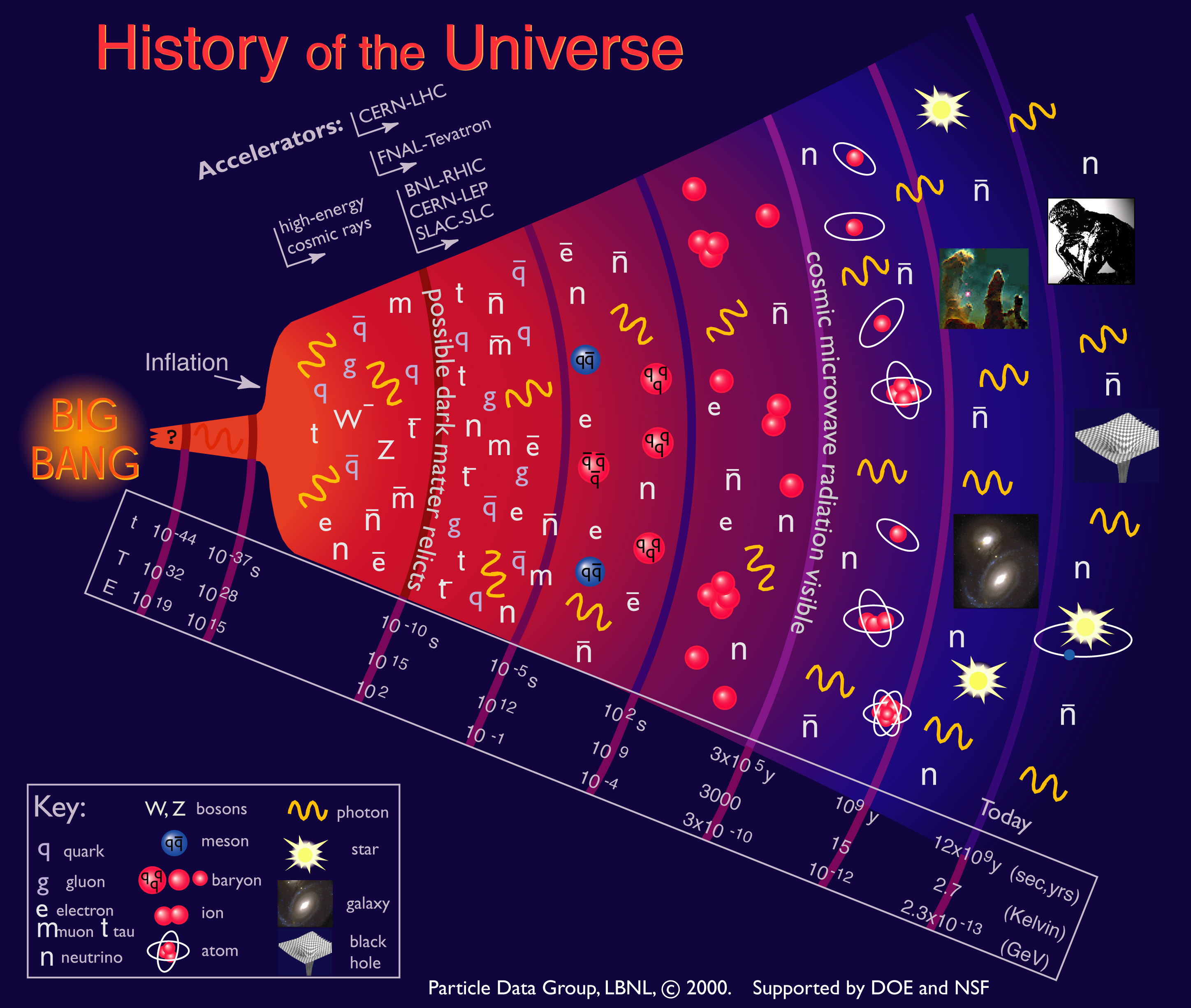
In the immediate aftermath of the Big Bang, when the Universe came into existence, there was no Higgs field (although technically it was present, its value was zero on average). All particles moved at the speed of light. As the Universe expanded and cooled down, the Higgs field suddenly acquired a non-zero value everywhere in the Universe in a process called Electroweak Symmetry Breaking. Some particles began interacting with this Higgs field, which slowed them down (e.g., electrons). The more they interacted, the slower they moved. This interaction is what we refer to as mass. Particles that do not interact with the Higgs field, like photons, continue to travel at the speed of light and have zero mass.


Q4: Are there any controversies surrounding the Higgs Boson? If so, what is your perspective on them?


One of the major mysteries surrounding the Higgs Boson is its mass. Despite being the second heaviest known elementary particle, it remains relatively light. Naively calculating the Higgs Boson's mass using the Standard Model would yield a value 16 orders of magnitude larger than the measured value. This conundrum is referred to as the Hierarchy Problem. Additionally, the small mass of the Higgs Boson leads to other particles being very light as well. Consequently, gravity appears incredibly weak compared to other fundamental forces. The electromagnetic force between a magnet and a paperclip is stronger than the gravitational force between the entire Earth and the paperclip. This significant disparity remains unexplained. However, it serves as a driving force that keeps us motivated and excited to continue studying the Higgs Boson. We are certain that there must be something beyond the Standard Model, which we can explore through experiments like the Large Hadron Collider at CERN.


The ATLAS experiment at CERN


Q5: What impact does expanding our knowledge of particle physics have on the scientific community and our daily lives?


Expanding our knowledge of particle physics has profound implications for both the scientific community and our daily lives. Here are some of the impacts.

  • Fundamental understanding of the universe: Particle physics seeks to comprehend the fundamental building blocks of the universe and their interactions. This knowledge enhances our understanding of the origins and evolution of the universe, as well as the laws that govern it.

  • Technological advancements: Particle physics research often leads to breakthroughs in technology. The development of new particle detectors, accelerators, and computational techniques for data analysis frequently have applications beyond particle physics. For example, medical imaging technologies like positron emission tomography (PET) and computed tomography (CT) have their roots in particle physics research. Notably, the World Wide Web was invented at CERN to facilitate communication among particle physicists, showcasing the transformative impact of particle physics on technology.

  • Computational and data science: Particle physics experiments generate vast amounts of data that necessitate sophisticated computational techniques for analysis. Addressing these challenges has propelled advancements in data science, machine learning, and high-performance computing, benefiting various fields.

  • Inspiration and education for future generations: The pursuit of fundamental knowledge and the discovery of new particles or phenomena inspire interest in science and motivate young minds to pursue careers in STEM (Science, Technology, Engineering, and Mathematics) fields. Many students involved in particle physics experiments ultimately venture into diverse fields such as medicine, finance, or data science. The skills acquired through particle physics research are highly transferable and sought after by employers.


Wednesday, November 13, 2019

"Star Clusters: Many-Body Gravitational Laboratories" - An Interview with Nicholas Rui of UC Berkeley

By Shoshana Harlem (MSS Intern, Terra Linda High School)

Nicholas Rui
Nicholas Rui is a current fourth-year undergraduate student at UC Berkeley who is studying physics and astrophysics.


1.  What made you interested in studying star clusters?

I was always somewhat interested in astrophysics as a child, as it seemed fantastical to me that humans would be able to gain so much intuition about the cosmos from our humble vantage point of Earth. My first research project ever, in fact, was on a dissolving star cluster near the center of the galaxy called the Quintuplet cluster, and at that time I was introduced to the fascinating dynamics that govern astrophysical objects such as these.

2. What are some interesting facts about star clusters that you have learned from studying them?

When we take our first classes in physics, one of the first things we learn is Newton's Universal Law of Gravitation, which describes a straightforward attractive force between any two objects with mass. Even though the law, at first, sounds superficial (and a bit boring), it turns out that there are some strange consequences of gravity which appear when you have millions of objects all interacting under gravity. For example, when you add energy to a normal material, you cause the atoms within it to jiggle around faster (thus raising its temperature). However, in gravitationally bound systems like star clusters, adding energy actually causes the stars in the cluster to slow down—star clusters have negative heat capacity. This causes star clusters to undergo runaway "core collapses" during which the number of stars in the cluster core rockets up, producing a dense region where stars interact very often.

3. What are the best parts of your job? What are the hardest parts of your job?

The best parts of my job are where, after a very long period of work, my code finally outputs that coveted plot outlining the answer to the question that I was asking, and being able to weave it into a coherent physical picture. The hardest parts are, of course, some of the moments in between where I am wrestling with some code bug, or when I am struggling to word a sentence in a precise enough way to communicate some physical phenomenon without going too deep into the weeds. You learn to take the good with the bad, but I promise the good is worth it.

4. What advice would you give to people who want to study star clusters?

Perhaps the most important thing for people who know they want to do astronomy is to learn how to code. When people think about what astronomers do, they often imagine rough-and-ready eccentrics pointing their backyard telescopes at Saturn, and it's true that some of us do this some of the time. However, especially in the age of big data, one of the primary jobs of the astrophysicist is making sense of the data that we obtain, and this requires being able to deal with it efficiently and with insight. Also, never give up your curiosity.

5. What current projects are you working on?

5. My most recent project has been on matching real star clusters that we actually observe to simulated star clusters based off of the brightness of the star clusters, as well as the velocities of those in the star cluster. Even though we can't see things like black holes, provided we trust our models, we can figure out how many black holes we expect to be inside a star cluster based off of things that we can measure.

Want to learn more about Nicholas Rui and star clusters? Join us on Wednesday, November 13, 2019 at Terra Linda High School from 7:30 PM - 8:30 PM in Room 207!

Learn more at 


Sunday, November 3, 2013

A Behind the Scenes Look into the Lawrence Berkeley Lab with Polite Stewart


by Jessica Gerwin, Drake HS

What makes Polite (pronounced “po-leet”) Stewart stand out from any other person working in the Advanced Light Source department at the Lawrence Berkeley Lab? The answer is that Polite is only nineteen years old. His remarkable story begins with a young boy who has a knack for learning.

Ever since an early age, Polite's parents could tell that he picked up new concepts at a much faster rate than other kids. After being enrolled in the Baton Rouge University at fourteen years old, Polite entered the Timbuktu program there which is designed to focus on studying advanced subjects of English and math. Polite excelled in his academic experience there and became one of the youngest graduates of the university’s 132 year history. His passion for physics can be expressed in his current work with the Advanced Light Source (ALS) at the Lawrence Berkeley Lab.

What is the Advanced Light Source?  “Think of it as one of the world’s most powerful microscopes. With such a tool, scientists and industry can study materials at the molecular level, such as improving the physical structure of pharmaceutical drugs to increase effectiveness, studying the degradation of materials in batteries to build energy storage devices that last longer, and identifying how the molecular structure of solar cells impedes energy conversion efficiency.” [1]

In the interview below, Polite talks about his work at the lab and provides valuable insights on how to strive reach your highest potential level of success.  His topic is highly specific so some here are some explanations of terms.

Terms:

  • Postbac - Post Baccalaureate (a college level degree)
  • ALS -  The Advanced Light Source is a specialized particle accelerator that generates bright beams of x rays for scientific research. [2]
  • How the ALS works - Electron bunches traveling nearly the speed of light, when forced into a circular path by magnets, emit bright ultraviolet and x-ray light that is directed down beam lines or tubes to different research labs. [2]
  • How Bright Is It? - The ALS produces light that is one billion times brighter than the sun. This tool offers research in materials science, biology, chemistry, physics, and the environmental sciences.  

The Berkeley Lawrence Lab


Interview:

1. What first sparked your interest in physics?
  • My interest in physics is related to kinetics (motion) Newtonian physics, and that interest was piqued because I knew it would be useful to know about force transmission in the martial arts. It also helped me gain a better understanding of mathematics, engineering, and chemistry via research and self-study; everything is connected. My true interest is bio-engineering. I plan to research neuro-muscular theory to help people improve and repair lost neuron connection.
2. What specific topic are you studying?   

  •       At the moment, I work with hard X-Ray Scattering, specifically Small-Angle(SAXS) and Wide-Angle(WAXS). X-ray scattering is an analysis technique that uses x-rays to determine the structural formation of an object. At my beam line, 7.3.3, we specialize in protein, block co-polymer, polymer, and semi-conductor based samples. Transmission SAXS/WAXS is used to view a sample's interior; whereas, Grazing Incidence(GISAXS/GIWAXS) is used to look at the surface structure of a sample.

X-Ray Scattering machine
Image Credits: http://www.saxswaxs.com


3. You are working with very sophisticated machines and ideas. Can you explain to high schoolers what the synchrotron does?
  •       A synchrotron is a huge particle accelerator that uses magnets to control electron bunches. The electron bunches are what make up the particle beam that each beam line end station (workplace) uses. The particle beam at our synchrotron is only a few micrometers wide and over 10x brighter than the sun.
4. Why is a synchrotron important?
  •      Well, that has a very long answer. The simplest answer would be to state that the aforementioned electron bunches are necessary to irradiate samples and therefore extract data...but, let's go deeper than that. First, a synchrotron is a just another version of the particle accelerator. So, we must determine why a particle accelerator is useful. Fundamentally, it is known that everything in this world is made up of atoms and molecules. There are smaller particles but we will only concern ourselves with the structures, for now, and not their components. Atoms and molecules are, of course, too small to see with the naked eye so, in essence, particle acceleration is our window into the world of the micro- and nano-structures.
  •       How does this work? The electron bunches are sped up to a very high constant speed and then the bunches are sent down each individual beam line's lead tunnel. The light is then rammed into your sample. When this occurs, the electrons in the beam will then collide with atomic and molecular structure of your sample. This will cause photons (light emission from the bouncing of electrons in particle space) to be emitted. This emission is then recorded and visualized as a scattering profile. This means that a synchrotron is very useful for allowing us to see the unseen. It is one of the many windows that helps us to understand the results of biology, chemistry, and engineering as a whole.

5. What do you hope to learn from this research?
  •       This research has only one real goal. It is to speed up the progress of science. At the synchrotron, there is something called beamtime. Beamtime is the experiment time given to each scientist who writes a proposal to use our beam line. This implies that many research groups frequent our beam line and the synchrotron itself. My job, and my employers', is to aid in the experimentation process. This increases (research) paper output, which in turn increases the output of scientific knowledge, and eventually improves consumer life (i.e. you).

6. Is this something that will help everyday people or businesses? Or both?
  •       The research that we do at the Advanced Light Source (ALS) is designed to help the commercial (consumer) and financial (business) sectors because helping the commercial automatically helps the financial.
7. How long do your projects take? 
  •       I have two jobs as a student researcher on the beam line: help the users (various research groups) at the beam line and write programs/make changes to enhance, and increase the efficiency of, the beam line. User assistance only lasts as long as the given research group's experiments. On the other hand, enhancement of the beam line will never stop.
8. What is a typical day in the lab like?
  •       There is no such thing as a typical day, but I would say days normally start off with determining whether users are present. If they are, the whole day is generally devoted to helping them with experiment setup and execution. If there are no users, then the morning might be spent cleaning the beam line and the remaining afternoon would be devoted to programming.
9. Where do you see yourself going?
  •       Currently, I see myself working for another year. Hopefully, it will be with Lawrence Berkeley Lab in the life sciences department. If not, I will apply to other labs and try to get a biological position. In the future, I would like to get a Masters in Bio-Engineering, possibly from Berkeley, and then go overseas to get my PH.D. and do my post-doc in Japan.
10. What do you recommend high school students do to get involved in research?
  •       This is a difficult question. The first step is to cultivate and maintain a self-driving spirit and will. From a different take, I'm saying that, first and foremost, the level to which you want to learn determines how much you learn. Effort and excellence are proportional; even you don't see the results immediately.
  •       Now that effort has been determined as the essential element, let us discuss the limiting factor: resources. Resources (lab equipment and opportunities) are hard to acquire and difficult to locate. However, there is a hack...and then there's a cheat code. I know they sound the same but they most certainly are not. The cheat code are summer programs. Look up as many as you can, find the ones that interest you, and apply with all the initiative you can possibly muster.
  •       Finally, the hack is the ability to network. How do you develop this hack? Talk to anyone and everyone who gives off a positive light. In school, on the street, in the store, at home, and especially at a place you would love to work at in the future. The key to your success is your voice and your ability to use it. When you see a person who could benefit you, address him/her, introduce yourself, and begin to discuss how you could help them and they can help you. Only practice can make you adept at communication, but once you can talk with poise and demonstrate mental rigor...there will be no limiting you or the passion which you hold in your heart.

    References:

   [1] The Collective Energy.  “Part 2: The Mad Scientists at the Department of Energy's National Laboratories”  Sept 23, 2013. <http://theenergycollective.com/mstepp/277291/pt-2-mad-scientists-department-energy-s-national-laboratories>.

   [2] "Advanced Light Source." Wikipedia. Wikimedia Foundation, 17 July 2013. Web. 03 Nov. 2013. <http://en.wikipedia.org/wiki/Advanced_Light_Source>.   

    The Advanced Light Source - A Tool for Solving the Mysteries of Materials." Advanced Light Source. N.p., n.d. Web. 03 Nov. 2013. <http://www.lbl.gov/MicroWorlds/ALSTool/>. 

    Further Reading:

    Learn more about Polite by clicking on the links below.
    What is the Berkeley Lawrence Lab all about? To learn more about getting involved, click here.

   Click here to see an interactive map of the Lawrence Berkeley Lab!

   See the Advanced Light Source Quick Facts in a pdf here.
   
   See the flyer for Polite’s upcoming presentation here.


   - Jessica Gerwin

Tuesday, March 26, 2013

The Birth of the Universe, through Today's Telescopes

by Sandra Ning, Terra Linda HS

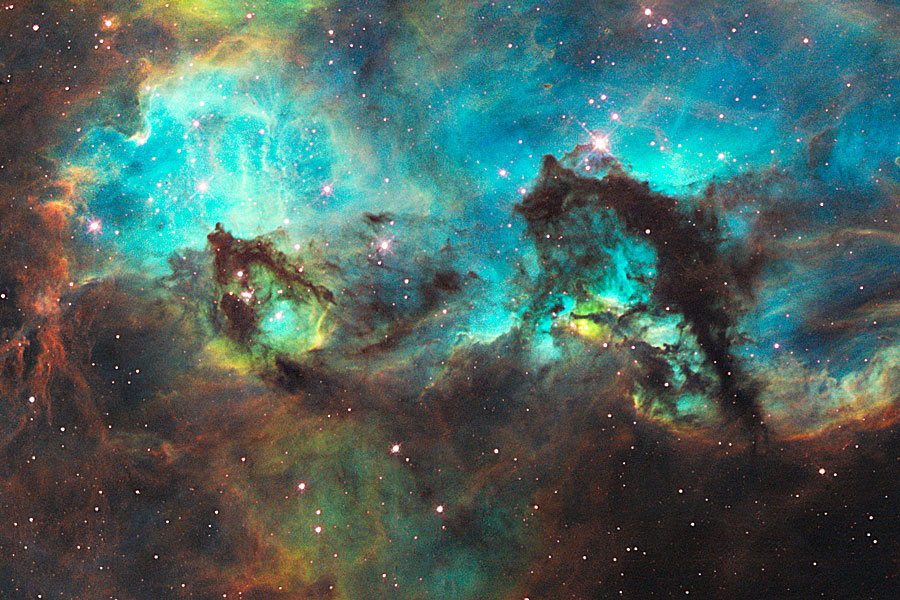
A nebula in the Large Magellanic Cloud. Though nebulae are often the focus of space appreciation in pop culture, the universe encompasses billions more phenomena.

     A story is typically told from the beginning, but oftentimes the universe is an exception. As a society, time is measured in days and nights, hours, minutes, and seconds. But even more so, time is apparent to us through the peachy sunrise of dawn, the angry grumbles of an empty stomach at noon, and the fatigue that settles with the darkness of night. It's hard to imagine any of these things in relation to the universe, with its sleepless planets and nomadic asteroids, all swallowed up in an unimaginably large blanket of space. If the universe is a story, and all the galaxies, comets, and stars its characters, where does it all begin? 
     Luckily, scientists have already delved into the origins of the universe, and have resurfaced with new and exciting insights regarding these questions. Dr. Mary Barsony, an associate professor of physics and astronomy at SFSU, has kindly answered several questions regarding the birth of the universe, the elements, and how scientists are researching it all.--

1. The Big Bang theory is the most widely-accepted theory for the creation of the universe. What kind of evidence have astrophysicists gathered to support this?


    a) Apart from the "immediate" neighborhood of our Milky Way Galaxy,
in any direction you look, the further away a galaxy is, the greater the shift
of its spectral lines towards longer wavelengths (e.g., towards the red portion of the spectrum, hence the term "red-shifted.") This systematic red-shift of extragalactic spectra
was first discovered nearly a hundred years ago, by combining spectra obtained
by V.V. Slipher at Lowell Observatory with distance determinations obtained by
E. Hubble at Mt. Wilson Observatory. 


           Any cosmological theory must explain this observational fact. According
to the Big Bang theory, the observed red-shifts are a direct consequence of
the expansion of the Universe since the Big Bang (13.7 billion years ago).
As space(time) expands, the light-waves stretch with the space they are in,
meaning their wavelengths get longer, or red-shifted.


 Timeline of the universe, showing the formation of particles, then nebula, then more.


     b) There is remnant radiation observed in all directions of space, corresponding
to a temperature of 2.73 Kelvins (above absolute zero), peaking at a wavelength of
~1 millimeter, which is in the "microwave" region of the electromagnetic spectrum.


         Any cosmological theory must explain why we see this radiation uniformly
in all directions in the sky.  According to the Big Bang theory, early in the
Universe's history, its state was extremely hot and dense--so hot that
protons and electrons were separated from each other in a state
known as a "plasma." Photons (light) cannot escape such a plasma,
since photons strongly interact with free electrons and protons. This
interaction is called "scattering."  As the Universe expands, it cools. Once the Universe
had expanded and cooled enough so that protons and electrons
could combine to form atoms, the plasma turned into an electrically
neutral state, and the photons could escape--so instead of a dense, opaque
fog of scattered photons, we have a transparent state of freely propagating photons (light).
The microwave background radiation was discovered (accidentally) by some radio
communications engineers (as a source of unwanted noise in their communications
equipment). They received the Nobel Prize in Physics for their discovery.


    c)  We observe the elemental abundances in the Universe to be
~90% (by number) hydrogen and ~10% (by number) helium.
In terms of mass, this corresponds to ~75% by mass of hydrogen and ~24% by mass
helium. All the other elements we are familiar with here on Earth are trace
elements relative to these, on the scale of stars, galaxies, and galaxy clusters.


      The abundances of hydrogen and helium are predicted by the Big Bang theory
in terms of what is known as "Big Bang nucleosynthesis."


2. Did all of the elements form at once with the Big Bang? And if not, in what order (if any) did they form in?


      The nucleon formation order in the Big Bang was: protons (protons are nuclei
of hydrogen) and neutrons, then deuterons (the nuclei of deuterium or heavy
water), then helium nuclei (both "light" helium, with  2 protons+1 neutron and "regular" helium, with 2 protons + 2 neutrons), then lithium. All the tritium nuclei (12 yr half-life) and beryllium nuclei (53 day half-life) formed in the Big Bang decayed into deuterons or lithium.
  
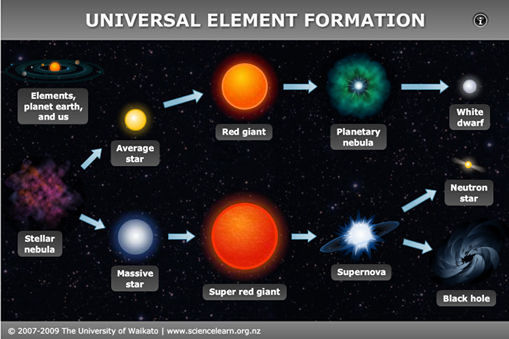
          All other elements are formed either within massive stars, post-main-sequence stars, supernovae, or spallation of cosmic particles and interstellar hydrogen nuclei (protons).


3. Would it be theoretically possible to create even more elements?


       Yes, elements past uranium, the so-called "trans-uranium" elements
are all formed in the lab with accelerators. Generally, these very heavy
elements are unstable and decay (their nuclei split apart, or undergo "fission")
in fractions of a second.


4. What elements are "stardust" and nebulae primarily composed of? 


    Interstellar dust is mainly composed of silicates and hydrocarbons.


     Nebulae are generally gas lit up by a nearby light source, which could be
a massive star or star cluster (e.g., Orion nebula) , a white dwarf (planetary
nebulae), a pulsar (Crab nebula), or very young star  (L1551 in Taurus).
Interstellar gas is primarily composed of hydrogen and helium, with  traces of
other, heavier elements.


A flowchart of star formation; protostars aren't shown in this chart, but would be between the stellar nebula and a fully-formed star.


6. What are neutron stars?

       A neutron star is an object made entirely of neutrons, that has a radius of ~10 km
and contains more than 1.4 solar masses.  Generally, it is a remnant of a
supernova explosion.

7.  And what are protostars?

       A protostar (of which I am one of the co-discoverers) is an object
which is still in the process of forming, with almost all of its mass residing
in an extended (~2000 Earth-Sun distances, or astronomical units) infalling envelope.
Its energy is derived from gravitational infall, and it fuels powerful bipolar
jets of gas, which act to remove its magnetic field and spin energy.


7. You're currently studying a protostar, the Wasp-Waist Nebula, right? What do scientists hope to learn from protostars, and for what purposes?


    Fantastic! You saw it! Yes, this nebula is mostly composed of hydrogen.
The protostar forming at the center of the Wasp-Waist Nebula may be the
first such object we have found that ultimately may form into a "failed star"
or "brown dwarf" (an object not massive enough to fuse hydrogen into helium
in its core) instead of into a low-mass star.


        We're hoping to understand, in detail, both how stars form from the
tenuous interstellar medium and how their planetary systems form.


The Wasp-Waist Nebula, which holds a protostar currently being studied.


8. Do orbiting planets form already orbiting a star? Or do they form, and then drift in space until a sizeable star is encountered?


     Actually, as stars form they form accretion disks, as well. Just like when
water goes down a drain, it generally swirls around before going down the center,
so gas and dust swirl around in a disk around the central protostar before falling in.
Planets eventually form from the disk orbiting the central young (pre-main-sequence,
or, not yet fusing hydrogen to helium) object.


9. Why are the outer planets all gas giants while the inner planets are all rock?


      That has to do with the temperature structure of the accretion disk
around a young, pre-main-sequence object. It's so hot close-in that only
rocky (silicates, iron) planets can form from planetesimals crashing into each other--it's too
hot for ices to form. Remember that, by far, most of the material in such
a disk is hydrogen, then helium, with just traces of heavier elements.


   Far enough out in the disk, the temperature cools enough so that both
ices (composed of water, carbon monoxide, ammonia) and rocks (silicates)
can form the central cores of planets. Once an icy/rocky core
surpasses about ten Earth masses, its gravitational pull can become
strong enough to hold onto and sweep up the disk's gas in and near its orbit.
This is how the gas giants Jupiter and Saturn, and the ice giants, Neptune and
Uranus, formed.


10. Is it difficult to study the formations of stars and planets? What obstacles are in the way of studying these formations?


       Yes, it's difficult, but it's rewarding. We are very lucky to live in the present
time, when our technology is allowing us to examine star and planet formation
in unprecedented detail.  The ALMA (Atacama Large Millimeter/submillimeter Array)
will revolutionize our understanding of this field.  This instrument (66 telescopes
working as one) was just inaugurated, on March 13, 2013.  https://science.nrao.edu


11. What kind of technology are scientists using to study these formations?


    Very many kinds. The ALMA array, for instance, uses the fastest, specially
made supercomputer (called a "correlator") to process the signals from
all of its antennas simultaneously every 10 seconds. The receivers for
detecting radiation from the sky are state-of-the-art and are approaching  (or at) the
quantum limit for how faint a signal they will respond to. Its data processing
software and user interface is brand new and continually being written and upgraded.
This is a truly international collaboration, with scientists from Europe,
North America, Taiwan, and Japan all equal partners in its use and development.


     For near-infrared arrays, to find new brown dwarfs
and young free-floating planets, we're using the largest such devices in existence.
For near-infrared spectroscopy, we're using a 400-fiber-optic fed
spectrograph (called FMOS) on the Subaru 8.0-meter telescope on Mauna Kea.
for a recent synopsis of this work).


     We're looking forward to JWST, the successor to Hubble, which will
work in the near- and mid-infrared. That is where we can study star and planet
formation much better than at optical wavelengths, where these objects
are generally invisible.


  12. How do SETI scientists try to find life in the universe?


  Currently, they are using the ATA (Allen Telescope Array),
looking in a specific frequency range (1-10 GHz) for
narrowband signals that might be transmitted by other


   SETI scientists are also studying geology, geophysics, atmospheric
science, and the conditions under which life may first have arisen on our own planet.
They are studying life in extreme environments on Earth, as in under the Antarctic
ice sheet and on the deep ocean floor where sunlight does not penetrate, and pressures
are high, etc.


13. You're very involved in different fields of astrophysics; how did you realize your interest in astronomy?

   I remember as a little girl of 4 or 5 years old, looking up at the dark sky, seeing the
stars, and wondering.

The night sky over the Church of Good Shepherd; New Zealand tried to get this patch of sky named a World Heritage Site.
 
--

Come join the Marin Science Seminar during our Astronomy Month presentations! This Wednesday, March 27, Dr. Mary Barsony will be presenting 'We are Stardust: Genesis of the Elements'. The Marin Science Seminar takes place from 7:30 to 8:30 p.m., in rm. 207 of Terra Linda High School.

--

Sandra Ning

Thursday, September 17, 2009

Detecting Illicit Nuclear Material with Edward Morse, PhD

Join us for the kick-off to the Marin Science Seminar Fall 2009 season!

Detecting Illicit Nuclear Material with Professor Edward Morse
Wednesday, September 23rd, 2009, 7:30 - 8:30 pm
Terra Linda High School, San Rafael, Room 207


Detecting nuclear material at ports of entry into the United States and at other locations is a daunting problem but is an essential element of a counterterrorism strategy for the country. A major difficulty in detection is the minimization of false-positive signals from a wide variety of cargo containing NORM, or naturally occurring radioactive material. One technique which looks promising is the use of nuclear resonance fluorescence (NRF) for detecting special nuclear material such as U-235. We have embarked on a five year program at UC Berkeley, called DoNuTS (Domestic Nuclear Threat Security), which looks at various aspects of the threat detection problem. This program will be discussed, with emphasis on the physics and technology of NRF as well as other aspects including materials science, computer machine vision, sensor networks, and basic nuclear physics research.

Prof. Edward Morse is a professor of Nuclear Engineering at UC-Berkeley and has a thirty-year involvement in teaching and research at Berkeley in the areas of applied physics, nuclear technology, electronics, and mathematics.

Interview with Irfan Kathiriya: How to Make or Break Your Heart

By: Sahiti Namburu School: Terra Linda High School Dr. Kathiriya is a pediatric cardiac anesthesiologist and Professor of Anesthesia at t...

About Us

Marin Science Seminar is a one-hour science lecture/presentation with a question and answer period open to all interested local teenagers, educators and community. Seminar sessions are held 12 Wednesday evenings during the school year, from 7:30 to 8:30 pm in the Innovation Hub at Terra Linda High School, 320 Nova Albion Way, San Rafael. Seminar speakers are scientists, mathematicians, engineers, physicians, technologists and computer programmers. The topics presented are in a specific area of the speaker’s expertise, geared to interested high school students.