
Showing posts with label Art Wallace MD PhD. Show all posts
Showing posts with label Art Wallace MD PhD. Show all posts
Wednesday, November 30, 2022


Tuesday, February 10, 2015
Interview with Art Wallace, MD PhD on Big Data and Medical Innovation
By Angel Zhou, Branson School
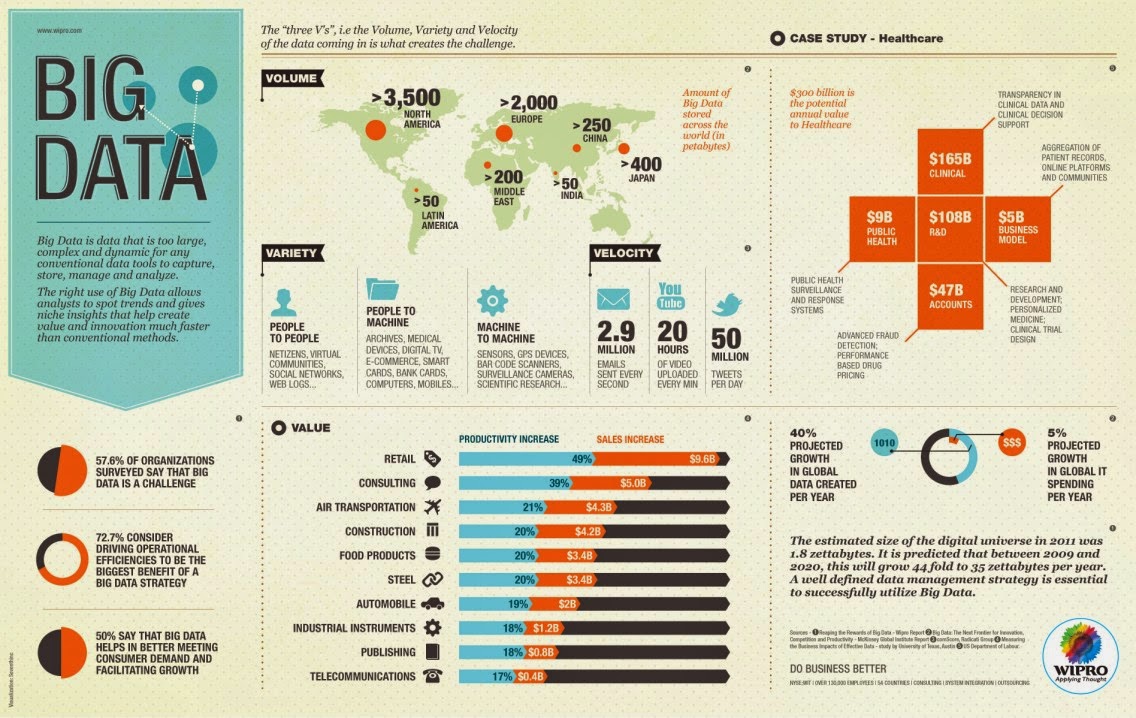
Mobile technologies, sensors, genome sequencing, and advances in analytic software now make it possible to capture vast amounts of information that could transform medicine. The question is: can Big Data make health care better?
In the upcoming Marin Science Seminar, "Big Data and Medical Innovation," Dr. Art Wallace, Chief of Anesthesia Service at the San Francisco VA Medical Center and a Professor of Anesthesiology and Perioperative Care at UCSF Medical Center, will discuss applications of Big Data in medicine and how Big Data has changed epidemiology, quality improvement, and drug discovery. Read the following interview to learn more about Dr.
Wallace’s thoughts on Big Data and its impact on medical innovation.
 |
| Art Wallace, MD PhD |
What is Big Data and what is its significance to medicine? What makes Big Data different from other data that people work with in the healthcare industry?
Big Data is data that is acquired for other purposes that can be analyzed to understand processes, people, and systems. Big Data includes many things: cell phone records, super market purchase card records, credit card records, medical records, internet search terms, medication usage, hospital admissions, social security records, etc. This data can be used for epidemiology to identify associations between factors and outcomes.
Big Data gives additional power to identify factors associated with rare outcomes. I can now easily do a study in 1 million people using data collected for administrative purposes. Doing a study in 1 million patients used to be enormously expensive, now it just requires computer programming and epidemiologic analysis. Before Big Data, the cost of collecting data was prohibitive, so many studies could not be done. With Big Data, there is little to no cost of collecting the data, making the analysis the entire cost for large studies. The profoundly lower costs with Big Data techniques make studies that were previously impossible, possible at minimal cost.
How does Big Data impact professionals in the medical field? Can Big Data be used to improve healthcare?
We have identified factors associated with adverse outcomes, identified medication practices that are associated with increased mortality, identified medications that can reduce morbidity and mortality, and we have identified possible therapies for diseases that have no current therapy. We can reduce morbidity, mortality, cost, and assist in the development of new therapies.
Big Data can be used to reduce morbidity, mortality, cost, and improve efficiency. Big Data can be used to ask questions that are morally, politically, technically, socially, ethically, or legally impossible to answer with randomized trials. Big Data is being used to improve quality of life while lowering costs.
Describe how Big Data is reshaping the drug industry?
Big Data can be used to identify medications that reduce or increase risks. Post marketing testing can identify medications that have significant associated morbidity and mortality. For example, we identified a drug that increased mortality risk 5 fold (increased from 3 to 15% with drug use). This use of Big Data led to a medication being taken off the market. It had been used in Europe for 30 years, in the U.S. for 10 years, and it increased the risk of death from 3 to 15%. Big Data was used to identify a very serious risk to patients and led to the medication being taken off the market.
How will Big Data accelerate innovation in medicine?
Big Data will be used to identify new uses of medications. It will identify risk factors for morbidity and mortality. It will lead to further randomized trials.
What are the benefits and dangers of providing Big Data online as the "ever expanding cloud of information" becomes more accessible?
It is easy to identify people from their digital detritus. It is easy to identify very personal things about people from their data trails. Factors such as financial status, interests, sexual orientation, political beliefs, religious beliefs, health status, pre-existing medical conditions, drug and alcohol use, pregnancy status, and proclivities can all be assessed via Big Data. Big Data can be used to manipulate, track, and market to people. At the same time, Big Data can identify very serious risks to patients’ health. Scientific method is an approach; Big Data is a tool. Both can be used for good or bad purposes. Big Data is simply a new and extremely powerful scientific tool.
Join us Wednesday, February 11th, 2015 to learn more about "Big Data and Medical Innovation" with Dr. Art Wallace from 7:30 - 8:30 PM Terra Linda High School, San Rafael in Room 207.
Tuesday, October 22, 2013
Entering the Medical Field
by Jessica Gerwin, Drake HS

Dr. Art Wallace, who is a cardiac anesthesiologist and the Chief of Anesthesia Service at the San Francisco Veteran Affairs Medical Center (SF VAMC) will be presenting at the Marin Science Seminars this Wednesday. His presentation “Making Medicine Safer”, will explore the vital roles that drugs, devices and software play in modern medicine. I had the opportunity to interview Dr. Wallace and was given insight on how to enter into medical professions. Our interview is below.
- Your B.S. was in Engineering and Applied Sciences. Did you start off wanting to be an Engineer? If so, what first sparked your interest in the field of medicine?
- I always wanted to be a doctor. My mother died when I was a young child and this experience focused my interest in medicine with a goal of preventing this problem in others.
- I started off in college with a goal to go to medical school but with an interest in physics and engineering as well. Electrical engineering appealed to me, so I majored in Engineering and Applied Science with a focus on electrical and biomedical engineering.
- I am fascinated by how stuff works.
- What kept you motivated to go through the intensive level of schooling needed to become an anesthesiologist?
- I was fascinated by medicine and research.
- In medical school, I my girlfriend developed cancer. This second experience with terminal illness drove me even harder to try to find therapies to help patients.
- I was driven to invent therapies that save lives.
- What makes you excited about going to work everyday?
- Providing the best care possible for patients.
- Creating the future of medical care. I focus on inventing therapies. Testing therapies. Making therapies better.
- What attributes, both teachable and non-teachable, do teenagers need to have to start pursuing a career in medicine?
- Fascination with science, medicine, people.
- Caring about people.
- Desire to understand how stuff works.
- What sort of local opportunities should teenagers be looking for?
- Exposure to science.
- Exposure to medical care – volunteer in a hospital.
- Do you feel that teenagers today underestimate what it takes to become a successful?
- Teenagers need to realize that it takes a long time to accomplish something significant. I worked for almost 30 years to become a doctor. Once I was a physician, it took 10 more years to get good at it.
- One can master a video game in a week (less than 168 hours). Becoming a doctor takes a minimum of 12 years of work 100 hours a week. That is more than 60,000 hours of work to become a doctor.
- What message would you like to give teenagers today about joining the medical field?
- It is great. I love it. I can’t imagine a better thing to do with my life.
- It takes a lot of work.
- Make sure it is something that fascinates you.
- There is enormous joy in providing care to patients. They are relieved. They don’t die. They are no longer in pain. It is a tremendous experience to be able to help a patient.
- It is a tremendous experience to invent a therapy that prevents morbidity and mortality.

To learn more about recent advances and methodologies in modern medicine, check out our next seminar on October 23rd featuring Dr. Art Wallace speaking on “Making Medicine Safer with Drugs, Devices, Software and More” The event will take place at Terra Linda High School Room 207 at 7:30 pm. To download the Fall flyer, click here.
Click on the link below for more information about Dr. Wallace
Image credits
-Jessica Gerwin
Subscribe to:
Posts (Atom)
Interview with Irfan Kathiriya: How to Make or Break Your Heart
By: Sahiti Namburu School: Terra Linda High School Dr. Kathiriya is a pediatric cardiac anesthesiologist and Professor of Anesthesia at t...

-
 with Art Wallace M.D. Ph.D. December 10, 2008, Room 207 Dr. Wallace started out in experimental surgery and radiology studying imaging of th...
 -
 with Asma Asyyed, M.D. Dr. Asyyed's research interest is in the neurological processes of alcohol addiction. While at UCSF she was invol...
 -
 By Sahiti Namburu, Terra Linda High School This drawing of hazardous materials and symbols is inspired by Julie Pettijohn's seminar, Dan...