Showing posts with label medicine. Show all posts

Thursday, December 1, 2022

"COVID 19 and Long Covid: Rapidly Developing Therapies For a New Disease" - An Interview With Art Wallace M.D. Ph.D. of the VA Medical Center San Francisco and UCSF

by Samantha Dvorin, Archie Williams High School 

Art Wallace is a cardiac anesthesiologist and biomedical engineer who works as a professor emeritus of anesthesiology and perioperative care at UCSF and the Chief of Anesthesia at VAMC SF. He researches drug and device development to reduce perioperative risk. He has a B.S. in engineering and applied science from Yale. He also has an M.D. and Ph.D. from Johns Hopkins Medical School in Biomedical Engineering. On Wednesday, November 30, 2022, Dr. Wallace presented "COVID 19 and Long Covid: Rapidly Developing Therapies For a New Disease" at the Marin Science Seminar. We asked him some questions about his work.

1. How has the world of drug development and research changed since the emergence of COVID-19?

Science has had to speed up dramatically. Normal drug development takes one to two decades. In COVID we had to do it in 1-2 years. Prior to COVID, the fastest any vaccine had ever been developed was 4 years. With COVID, it was done in 1 year! AIDS has been around 40 years and we still don't have a vaccine.

2.  Who is most at risk for Long COVID and is it preventable?

Older people, people with co-existing disease, and unvaccinated people. But, young, healthy, vaccinated people, who didn't get very ill with covid can still get Long COVID. Prevention is very simple, don't get COVID and get vaccinated and boosted.

3. What are some common misconceptions people have about COVID, especially Long COVID?

There are several diseases such as myofascial syndrome and chronic fatigue syndrome which we don't understand. We don't know the cause or have any treatment or know if they are really diseases. When a disease is of unclear origin with no therapy there is a tendency to say it is psychosomatic (in your head) or is just depression. When Long COVID came along some people thought it was just depression. Some thought it was psychosomatic. The NIH invested more than 1 billion dollars with the sole question of “is this a real disease?” and gave the grantees four years to figure it out. These grants were not allowed to search for cures for long covid, just ask, does it exist. A month after the request for proposals, an epidemiologist in the VA Al-Aly did epidemiology to show exactly what the symptoms were, how many people got them, and how long they last, essentially making the NIH studies, which hadn't yet even started, useless. 

4. Why does every patient experience Long COVID differently and does it have anything to do with previous health issues or the severity of their initial COVID diagnosis?

Long COVID seems to be a multitude of problems. Microvascular damage, autonomic damage, neuroinflammatory processes, cardiac and renal damage, and psychiatric problems. People who get severe COVID have more problems with long covid, but people who get mild COVID can still develop long covid. The exact cause is unclear. It is likely multiple factors including immune response, the severity of illness, microvascular damage with small thrombi causing stroke, neuroinflammation, and maybe some residual virus. The causes are unknown.

5. Does having the COVID vaccine and the subsequent boosters have any effect on the likelihood of getting Long COVID or on the severity of the disease? 

Yes. Vaccination reduces the risk of long covid by about 15%.

6.  What does a typical day as a cardiac anesthesiologist and biomedical engineer look like?

Get up at 5 am to go to work. Three days a week I work in the OR providing anesthesia care to patients. Two days a week I do administrative work (hire people, get them paid, etc, etc, etc). I then use the rest of the time to do science (figure out how to pay for it, fill out paperwork to get it approved, write grants, develop software, publish papers). Then go home around 7 pm. Oh, then I am on call at night and on weekends when people have a disaster.

Dr. Wallace in the operating room

7.  What advice would you give a young person interested in medicine or medical research? 

Study hard, take science, math, etc classes. Do well in class. Apply to the best college you can get into. Get perfect grades. Then take a year of English, a year of calculus or higher math, a year of chemistry with a lab, a year of organic chemistry with a lab, a year of physics with a lab, biochemistry, psychology, statistics, and then major in something. I was an electrical engineer. Volunteer in hospitals so you can decide if and why you want to be a doctor. Volunteer in a lab doing research to learn how to do research. Then apply to medical school and or an MD/Ph.D.

8. What is your team working on now to advance the drug development process for Covid and Long COVID? 

We are looking at publishing continuously a daily update on vaccine efficacy and boosters. We are trying to get funding for the long covid drug development project. Paying for research is the hardest part.


Learn More:


Wednesday, November 30, 2022

Covid-19 and Long COVID: Rapidly Developing Therapies for a New Disease

 On November 30, 2022 Art Wallace presented studies and statistics on a new disease, Long  COVID.

Art Wallace, MD PHD
Art Wallace, MD PHD


Art Wallace introducing himself!

He explained the problems with Covid variants and why Long COVID presents negative long term effects.
Explaining their research objectives!


Learn more about Covid-19 and Long COVID at Marin Science Seminar!

Tuesday, February 10, 2015

Interview with Art Wallace, MD PhD on Big Data and Medical Innovation


By Angel Zhou, Branson School


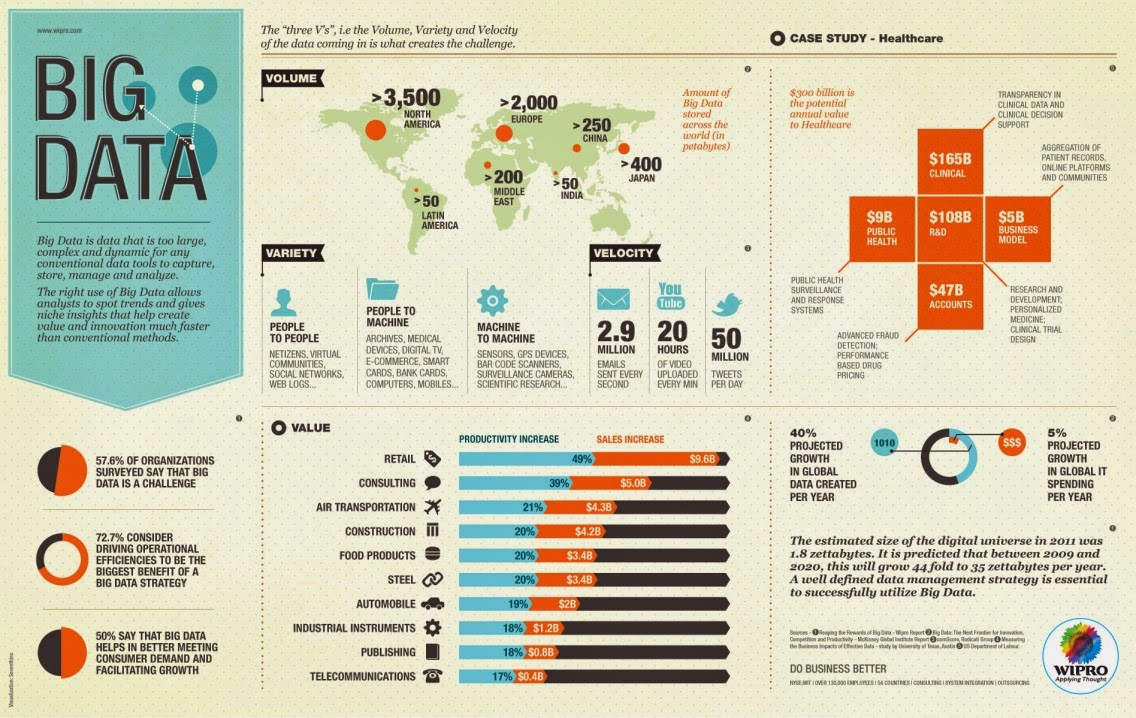
Mobile technologies, sensors, genome sequencing, and advances in analytic software now make it possible to capture vast amounts of information that could transform medicine. The question is: can Big Data make health care better?

In the upcoming Marin Science Seminar, "Big Data and Medical Innovation," Dr. Art Wallace, Chief of Anesthesia Service at the San Francisco VA Medical Center and a Professor of Anesthesiology and Perioperative Care at UCSF Medical Center, will discuss applications of Big Data in medicine and how Big Data has changed epidemiology, quality improvement, and drug discovery. Read the following interview to learn more about Dr. 

Wallace’s thoughts on Big Data and its impact on medical innovation.

Art Wallace, MD PhD

What is Big Data and what is its significance to medicine?  What makes Big Data different from other data that people work with in the healthcare industry?

Big Data is data that is acquired for other purposes that can be analyzed to understand processes, people, and systems. Big Data includes many things: cell phone records, super market purchase card records, credit card records, medical records, internet search terms, medication usage, hospital admissions, social security records, etc. This data can be used for epidemiology to identify associations between factors and outcomes.

Big Data gives additional power to identify factors associated with rare outcomes. I can now easily do a study in 1 million people using data collected for administrative purposes. Doing a study in 1 million patients used to be enormously expensive, now it just requires computer programming and epidemiologic analysis. Before Big Data, the cost of collecting data was prohibitive, so many studies could not be done. With Big Data, there is little to no cost of collecting the data, making the analysis the entire cost for large studies. The profoundly lower costs with Big Data techniques make studies that were previously impossible, possible at minimal cost.

How does Big Data impact professionals in the medical field? Can Big Data be used to improve healthcare?

We have identified factors associated with adverse outcomes, identified medication practices that are associated with increased mortality, identified medications that can reduce morbidity and mortality, and we have identified possible therapies for diseases that have no current therapy. We can reduce morbidity, mortality, cost, and assist in the development of new therapies.
  
Big Data can be used to reduce morbidity, mortality, cost, and improve efficiency. Big Data can be used to ask questions that are morally, politically, technically, socially, ethically, or legally impossible to answer with randomized trials. Big Data is being used to improve quality of life while lowering costs.

Describe how Big Data is reshaping the drug industry?

Big Data can be used to identify medications that reduce or increase risks. Post marketing testing can identify medications that have significant associated morbidity and mortality. For example, we identified a drug that increased mortality risk 5 fold (increased from 3 to 15% with drug use). This use of Big Data led to a medication being taken off the market. It had been used in Europe for 30 years, in the U.S. for 10 years, and it increased the risk of death from 3 to 15%. Big Data was used to identify a very serious risk to patients and led to the medication being taken off the market.

How will Big Data accelerate innovation in medicine?

Big Data will be used to identify new uses of medications. It will identify risk factors for morbidity and mortality. It will lead to further randomized trials.

What are the benefits and dangers of providing Big Data online as the "ever expanding cloud of information" becomes more accessible?

It is easy to identify people from their digital detritus. It is easy to identify very personal things about people from their data trails. Factors such as financial status, interests, sexual orientation, political beliefs, religious beliefs, health status, pre-existing medical conditions, drug and alcohol use, pregnancy status, and proclivities can all be assessed via Big Data. Big Data can be used to manipulate, track, and market to people. At the same time, Big Data can identify very serious risks to patients’ health. Scientific method is an approach; Big Data is a tool. Both can be used for good or bad purposes. Big Data is simply a new and extremely powerful scientific tool.   


Join us Wednesday, February 11th, 2015 to learn more about "Big Data and Medical Innovation" with Dr. Art Wallace from 7:30 - 8:30 PM Terra Linda High School, San Rafael in Room 207.

Wednesday, October 8, 2014

Saving Our Ocean Friends: An Interview with Dr. Claire Simeone of the Marine Mammal Center

by MSS Intern Isobel Wright, Tamalpais High School

From sea lions with cancer to stranded motherless seal pups, Dr. Claire Simeone knows just what to do. Dr. Simeone works as a Conservation Medicine Veterinarian at The Marine Mammal Center in Sausalito, California and at the National Marine Fisheries Service in Washington, DC. In addition to tending to sick animals, she travels the world to attend Unusual Mortality Events, international training programs, and works on the Marine Mammal Health Map. Dr. Simeone attended the University of Maryland College Park to receive her BSc in Physiology and Neurobiology, and graduated from veterinary school at Virginia Tech. Read the following interview to learn more about life at the Marine Mammal Center and working with animals. 

Claire Simeone, DVM

            Could you walk me through your typical day at The Marine Mammal Center?

One of the best things about working at The Marine Mammal Center is that every day is different. Some days, you’re caring for harbor seal pups that have been separated from their mother. Another day, you’re treating California sea lions with cancer. You might be medicating elephant seals that are dying of lungworms. Some days, you’re treating all of those animals, plus caring for the two hundred additional animals that are ALSO onsite. 

As a veterinarian, I usually start my day walking around the pens to check in on all of the animals on-site, and then our team starts procedures, which include blood draws, x-rays, and surgeries. If animals die, we perform post-mortem exams to determine why they died. At the same time, our volunteer crews (more than 1,000 committed people!) are preparing fish, feeding the animals, and cleaning their pens. Our night volunteer crews take care of the animals into the night, and the veterinarians and technicians are on-call 24 hours a day to make sure all of the animals receive the care they need.

What are the best and worst parts of your job?

There are so many best parts of my job. First, I’m lucky to be able to travel around the world to care for marine mammals and learn more about them. Second, I really feel that I’m making a difference with the work I’m doing – whether it’s saving a seal pup or training the next generation of marine mammal veterinarians. Third, I’m constantly learning new things – about marine mammals, their habitats, and what affects their health. 

Because I do work with animals, a difficult part of the job can be seeing animals that are suffering, often because of things humans do – but it helps to know that we are doing everything we can to bring that animal back to health.

What does it feel like to rescue an animal?

Imagine getting a call from someone who was on vacation, and saw a California sea lion that had fishing line around his neck. First, you feel focused – you take down the description of the animal from the citizen, check your maps, and plan out your strategy. Your rescue volunteers have confirmed that this animal is one you’ve been watching for months, and he’s asleep on the beach. You load up the truck, and make the drive to meet your team. You feel hopeful – he’s still snoring away. Holding your breath, you sneak up slowly, and then with a leap you throw the net over his head. He roars as he jumps up and finds himself trapped. With swift action your team boards him into a carrier, and as stealthily as you came, you load him into the truck. You feel elated as you watch him resting calmly on the way home. 

After a quick procedure to remove the line, it’s clear his wound will heal on its own, and he’s ready to go back to the ocean. After driving him back to the beach, you open the carrier, and he strides out into the waves and dives under the break. You feel proud that you’ve saved this animal’s life, and returned him to his ocean home. 

What’s the most common injury/disease you see in marine mammals? How can we prevent this?

Unfortunately, we commonly see injuries that are due to something called human interaction – entangled in fishing line, nets, or plastic packing straps; ingesting pieces of plastic; struck by a boat; or gunshot. In 1972 the Marine Mammal Protection Act was passed, making it illegal to harass or harm a marine mammal. However, many marine mammals are still harmed in passive ways from our trash or discarded items. You can prevent these entanglements by properly disposing of plastics, and helping to keep beaches clean by picking up any trash you see. Just a few weeks ago the annual International Coastal Cleanup Day brought 54,000 volunteers to California’s coasts. They removed over 680,000 pounds of trash in one day!

What level of education and experience do you need to obtain a job like yours?

As a veterinarian, I have a bachelor’s degree, as well as a DVM – Doctor of Veterinary Medicine. However, there are many ways that you can be involved with marine mammals or ocean conservation – through a Master’s or PhD, if you’re more science-focused, or you can have a completely unrelated career, and get your fill through volunteering at a facility like TMMC. We even have a Youth Crew volunteer program for teenagers 15-18 years old (learn more at http://www.marinemammalcenter.org/Get-Involved/volunteer/youth-crew ). As far as experiences go, I would recommend doing as much as you can to get a variety of experiences, which will help you decide what is really right for you. I’ve worked with dogs and cats, horses and cattle, birds and seals, and each experience set me up for the next step in my career. 

What have you learned from working with these animals?

I’ve learned that in order to conserve energy while diving, some seals can lower their heart rate to 10 beats per minute, and right before they surface, their body speeds the rate back up to 120. I’ve learned that a sea otter, if left alone, will unscrew all of the screws on a drain – that were placed with an electric drill! – with its bare paws. And I’ve learned that a harbor seal, blind from cataracts, can find fish by sensing the water movement with its vibrissae (whiskers). Each one of our patients has given me great stories with which to share the knowledge I’ve learned. 

What is an Unusual Mortality Event? What is it like to attend one? Tell me about the most recent one you attended? 

If a group of marine mammals are sick, they may strand on the beach near one another. Unusual Mortality Events (UMEs) are declared when the number of sick or dying animals is larger than expected in that area or time frame. A panel of experts is then called to lead a response to care for the animals, and to try to figure out why they are dying. A recent UME was close to home – in 2013, more than 1500 starving California sea lion pups washed up on southern California beaches. Thanks to the UME response team, it was determined that the reason the pups were starving was because the fish their moms were feeding on had moved farther offshore – meaning they had to go farther to forage. This caused moms to either lack the milk they needed to nurse them, or abandon their pups completely. Caring for hundreds of sea lion pups at a time is exhausting – most need to eat 3-4 times a day, and they may need treatment for vomiting, diarrhea, or pneumonia. It was thanks to hard-working rehabilitation centers, like TMMC, all along the California coast, that we were able to save so many pups. 

What is the Marine Mammal Health Map? How do you contribute to it?

Think about all of the animals we’ve talked about – starving sea lions, entangled elephant seals, gunshot animals or animals with cancer. Each one of these animals provides a unique look at what is happening in the ocean at that location. All of the animals that come through TMMC have a record with all of their health information. Similarly, all of the stranding centers across the country have records on all of their animals. However, there is no centralized database to collect these data, or display them for all to see. The Marine Mammal Health Map will be that space – so that biologists, veterinarians, and members of the public will know what’s happening to marine mammals in their area. I’m working with scientists from around the country to develop the Health Map and ensure that all of our marine mammals are represented. You’ll have to come to the talk to learn more!

Watch this video below to see the process of the rescuing, rehabilitation and release of a sea lion...


Join us for "Sick Seals and Seizing Sea Lions: What Marine Mammals Can Tell Us About the Health of Our Oceans" with Claire Simeone DVM of The Marine Mammal Center, Sausalito - Wednesday, October 8th, 2014 at Marin Science Seminar

Monday, May 12, 2014

High Tech Mannequins

by Gillian Parker, Tamalpais HS   

Oftentimes it is nerve-wracking or even dangerous for new medical staff to carry out certain procedures on real patients. At the VA Medical Center in San Francisco, the Simulation Center has high tech mannequins to help train staff in a low-risk environment. These mannequins simulate a normal patient and allow new staff to practice various procedures like chest tube insertion and IV catheter insertion, among others. They can also be hooked up to monitors that are often used to observe patients.
     Abi Fitzgerald practices one day every week in the emergency department at the SFVA as part of her one year fellowship in advanced clinical simulation. She is an RN and achieved her MSN at San Francisco State University. Read the following interview with Abi Fitzgerald to find out more about her experience with the simulators!


1. What is the best part about having the high tech mannequins to practice on?
    
    The manikin's ability to simulate human functions allows clinicians to practice going through the physical motions assessing patients in both emergent and non-emergent situations, as opposed to verbally walking through the process.  This develops muscle memory and skills for recognizing normal vs. abnormal breath sounds, heart sounds, mental status, neurological functions and more.  

2. How would medical staff be trained without these medical robots?
    They could practice on actors, in which case the abnormal functions such as wheezes or heart murmurs are difficult to simulate.  They would also practice on real patients, which they still currently do, but using a manikin allows them more freedom to perform procedures and other tasks that they wouldn't necessarily be able to do on a live patient. Working with manikins allows students and clinicians to refine their skills before working with actual patients.
3. What procedures have you performed on the simulators? Could you describe some?
This year the VAMC sim lab acquired a few new simulators that have allowed us (the simulation fellows) and the clinicians who train on them, to become more familiar with a lot of new procedures.  We now have an endovascular trainer which simulates procedures that take place in the cath lab such as non-open heart valve replacements.  This is when the doctors access the heart valve through a long wire and tube that is inserted in the leg and follows the artery all the way up to the aorta and into the heart where they can replace replace a heart valve using fluoroscopic imaging. We also have a new manikin that simulates ultrasounds and displays a three dimensional virtual reality image on a computer screen.   
4. Are there any flaws/negatives to the simulators?
   
The cost of acquiring the simulators and the repair costs can be high, but the quality of training and knowledge gained are very much worth it.  Additionally, ongoing research projects have resulted in the acceptance of grant proposals which has made the acquisition of some of the simulators possible. 
5. What are some things that the simulators can't fully prepare you for?
  Even though we do our best to make simulated scenarios as real as possible, there are always some elements such as smells and unexpected outcomes that can be difficult but not impossible to simulate well.

Come to the Marin Science Seminar on Wednesday, May 14th, 7:30-8:30 to hear Abi Fitzgerald and Richard Fidler talk about medical education robots at Terra Linda High School in Room 207, 320 Albion Way, San Rafael, CA 94903

Monday, March 24, 2014

The Adorable, Rewarding, and Sometimes Difficult Task of Birthing Babies


 by Claire Watry, Terra Linda HS

A common misconception is that the only job of a midwife is to deliver babies. In reality, the duties of a midwife begin long before the baby is born. A midwife can screen for diseases, prescribe certain 
medications, help the mother stay healthy during pregnancy, monitor the baby's growth before and after 
birth, provide emotional support, discuss care options and breastfeeding, support the mother and
her child after birth, and provide many more services in addition to the delivering the baby. As a 
midwife, upcoming MSS speaker Sheri Matteo is responsible for the health and wellbeing of a woman
and her baby for the entire length of the pregnancy and beyond. The video below shows the benefits of 
midwifery for women. 


 Matteo explained that midwifery in the U.S. has undergone many changes throughout history.
"Before the early 20th century, most babies in the US were delivered by midwives at home. Then 
medicine, mostly male doctors, brought birth into hospitals and birth became a medical condition. 
Women were put to sleep and babies were delivered with forceps. Moms were encouraged to bottle 
feed. Midwifery pretty much vanished. In the 1970’s, with the rise of feminism and the “natural birth” 
movement, midwifery as a profession started to grow again. Unlike many other industrialized countries
with better childbirth statistics where midwifery care is the norm, midwifery in the US has stayed on 
the fringe and been seen as an “alternative” birth option. In the 15 years that I have been practicing, 
I have seen many midwifery services grow and disband based on whatever economic issue was driving
healthcare at that time. Healthcare in the US is still largely driven by economics and legislation, but 
midwives and other “mid levels” or “allied health professionals” are rising in use and stature. We 
have rigorous education and certification maintenance programs and are fully integrated into healthcare
teams with nursing, case managers and social workers, as well as doctors. The profession is growing in
numbers and strength and our good outcomes are more commonly recognized by clients and medicine
professionals." According to Time magazine, approximately 8% of babies born in the U.S. - a record 
high - and about 24% of babies in New Mexico were delivered by midwives in 2009. While delivery in 
the U.S. usually takes place in a hospital in the presence of obstetricians, more and more women are 
turning to midwives. 


Read the rest of the interview with Sheri Matteo for a sneak peek preview of her upcoming MSS 
presentation "Birthing Babies: What it Takes to be a Nurse Midwife". 


How did you decide to become a midwife?  
I was premed in college and always thought I wanted to be an obstetrician. I was also a singer and performed in HS and college plays. I spent my junior year abroad studying acting in London and when I returned I realized I no longer wanted to go to med school. I received my BA in Theatre Arts at Brown University. I worked as an actress in NYC, off-Broadway and as a member of a theatre company. Working on a play with an older actress, I discovered her daughter was a midwife. I didn’t even know midwifery was a profession at that time! Shortly after, I met a woman who was an obstetrician. I was really inspired hearing about her work. She invited me to “take call” with her one night at the hospital. I saw a birth and I was hooked! Midwifery appealed to me more than medicine because of its emphasis on childbirth as a natural part of life, not a medical condition that needs to be “treated”.


How does one become a midwife? What sort of training or education is necessary?  
There are many different kinds of midwives in the US and several different ways to become one. There are “lay” midwives who receive traditional training as an apprentice of another lay midwife. These midwives are sometimes state licensed and sometimes not. They are not eligible to work in hospitals so they only do home birth.  To be a Certified Nurse Midwife, I had to enroll in nursing school with the plan to continue onto graduate school. I went to Columbia University School of Nursing in NYC. They have a special nursing program for people who already have a baccalaureate. Instead of four years, I earned my BSN (Bachelors of Science in Nursing) in one and a half years. I continued on to complete my Masters in Nursing (MSN) in another one and a half years, for a total of three straight years and two degrees.

What are the responsibilities of a midwife? What is a typical day?  
Certified Nurse Midwives can perform nearly all aspects of women’s health primary care. We screen for diseases, including cervical cancer, breast cancer and STDs. We can prescribe medicine including birth control and antibiotics. We perform prenatal care, making sure moms stay healthy in pregnancy and their babies are growing well.  We can deliver babies in the hospital, in birth centers, or at home. We support women with breastfeeding and take care of them postpartum. We do a lot of client teaching about their health, bodies, and care and treatment options. Though we do not perform surgery like c/sections, we are hands-on surgical assistants. A typical day involves either working at the clinic seeing prenatal patients (between 12-20 in 8 hours) or working in the hospital supporting moms in labor and delivering babies. Because I am the Director of my group of 12 midwives, I also have office work and a lot of meetings to attend. I work on marketing my group’s services, hospital quality and safety and employee satisfaction and performance.


What is the most exciting, rewarding, or difficult aspect of being a midwife?  
Watching new families grow! Helping women be and stay healthy. Meeting all kinds of people from all different cultures. Working with women and empowering them to believe in their natural ability to birth and mother.

What advice do you have for young people aspiring to be in a healthcare profession?  
It is very hard work but also very rewarding. Never forget to treat all people with dignity and respect.


To learn all about midwifery and birthing babies, attend the Marin Science Seminar presentation "Birthing Babies: What it Takes to be a Nurse Midwife" with Sheri Matteo, RN, CNM of Prima Medical Foundation, Marin General Hospital on Wednesday, March 26, 2014, 7:30 – 8:30 pm, Terra Linda High School, San Rafael, Room 207. See the flyer here

For more information go to:
Our Bodies Ourselves Health Resource Center
Dimensions Healthcare System
Student Medics
Time Magazine

Image credits:
https://drewstarr.wordpress.com/pictures/early-american-midwifery/
http://www.sciencemuseum.org.uk/broughttolife/themes/birthanddeath/childbirthandmedicine.aspx
http://healthsciencetechnology.wikispaces.com/Midwife
http://organichomebirth.com/
http://firststepskent.org/welcome-home-baby/welcome-home-baby-book/

~Claire Watry

Tuesday, October 22, 2013

Entering the Medical Field

by Jessica Gerwin, Drake HS

Dr. Art Wallace, who is a cardiac anesthesiologist and the Chief of Anesthesia Service at the San Francisco Veteran Affairs Medical Center (SF VAMC) will be presenting at the Marin Science Seminars this Wednesday. His presentation “Making Medicine Safer”, will explore the vital roles that drugs, devices and software play in modern medicine. I had the opportunity to interview Dr. Wallace and was given insight on how to enter into medical professions. Our interview is below.


  1. Your B.S. was in Engineering and Applied Sciences. Did you start off wanting to be an Engineer?  If so, what first sparked your interest in the field of medicine?
    1. I always wanted to be a doctor. My mother died when I was a young child and this experience focused my interest in medicine with a goal of preventing this problem in others.
    2. I started off in college with a goal to go to medical school but with an interest in physics and engineering as well. Electrical engineering appealed to me, so I majored in Engineering and Applied Science with a focus on electrical and biomedical engineering.
    3. I am fascinated by how stuff works.


  1. What kept you motivated to go through the intensive level of schooling needed to become an anesthesiologist?
    1. I was fascinated by medicine and research.
    2. In medical school, I my girlfriend developed cancer. This second experience with terminal illness drove me even harder to try to find therapies to help patients.
    3. I was driven to invent therapies that save lives.


  1. What makes you excited about going to work everyday?
    1. Providing the best care possible for patients.
    2. Creating the future of medical care. I focus on inventing therapies. Testing therapies. Making therapies better.


  1. What attributes, both teachable and non-teachable, do teenagers need to have to start pursuing a career in medicine?
    1. Fascination with science, medicine, people.
    2. Caring about people.
    3. Desire to understand how stuff works.

  1. What sort of local opportunities should teenagers be looking for?
    1. Exposure to science.
    2. Exposure to medical care – volunteer in a hospital.

  1. Do you feel that teenagers today underestimate what it takes to become a successful?
    1. Teenagers need to realize that it takes a  long time to accomplish something significant. I worked for almost 30 years to become a doctor. Once I was a physician, it took 10 more years to get good at it.
    2. One can master a video game in a week (less than 168 hours). Becoming a doctor takes a minimum of 12 years of work 100 hours a week. That is more than 60,000 hours of work to become a doctor.

  1. What message would you like to give teenagers today about joining the medical field?
    1. It is great. I love it. I can’t imagine a better thing to do with my life.
    2. It takes a lot of work.
    3. Make sure it is something that fascinates you.
    4. There is enormous joy in providing care to patients. They are relieved. They don’t die. They are no longer in pain. It is a tremendous experience to be able to help a patient.
    5. It is a tremendous experience to invent a therapy that prevents morbidity and mortality.


To learn more about recent advances and methodologies in modern medicine, check out our next seminar on October 23rd  featuring Dr. Art Wallace speaking on “Making Medicine Safer with Drugs, Devices, Software and More” The event will take place at Terra Linda High School Room 207 at 7:30 pm. To download the Fall flyer, click here.

Click on the link below for more information about Dr. Wallace


Image credits


-Jessica Gerwin

Interview with Irfan Kathiriya: How to Make or Break Your Heart

By: Sahiti Namburu School: Terra Linda High School Dr. Kathiriya is a pediatric cardiac anesthesiologist and Professor of Anesthesia at t...

About Us

Marin Science Seminar is a one-hour science lecture/presentation with a question and answer period open to all interested local teenagers, educators and community. Seminar sessions are held 12 Wednesday evenings during the school year, from 7:30 to 8:30 pm in the Innovation Hub at Terra Linda High School, 320 Nova Albion Way, San Rafael. Seminar speakers are scientists, mathematicians, engineers, physicians, technologists and computer programmers. The topics presented are in a specific area of the speaker’s expertise, geared to interested high school students.