Tuesday, February 24, 2015

Why Do We Age?

By Angel Zhou, Branson School


Why do we age? It might seem like a silly question, but scientists have asked it in hopes that they might one day counteract the process.

Never before have so many people lived for so long. Life expectancy has nearly doubled over the last century, and today there are 36.8 million Americans age 65 and older. Longer life has obvious appeal, but it entails personal hardships and financial burdens. In addition to personal hardship, there is also a cost to society. The financial burden of treating the chronic diseases of aging is expected to rise steadily as Baby Boomers get older. Politics may come to be dominated by the old, who might vote themselves ever more generous benefits for which the young must pay. If longer life expectancy simply leads to more years in which pensioners are disabled and demand expensive services, health-care costs may balloon as never before, while other social needs go unmet.

Since 1999, scientists have studied ways to make organisms live much longer, and with better health than they naturally would.  Previous research assumed that chronic diseases arise and should be treated individually. What if, instead, aging is the root cause of many chronic diseases, and aging can be slowed?


The Buck Institute for Research on Aging (http://www.buckinstitute.org) is the nation’s first independent research facility focused solely on understanding the connection between aging and chronic disease. At the Buck Institute, world-class scientists work in a uniquely collaborative environment to understand how normal aging contributes to the development of conditions specifically associated with getting older such as Alzheimer’s and Parkinson’s diseases and cancer. Their interdisciplinary approach brings scientists from disparate fields together to develop diagnostic tests and treatments to prevent or delay these maladies and to ultimately increase the healthy years of life.

The aging of our population — in past decades and in the foreseeable future — presents both a challenge and an opportunity for all of us as we seek to stay healthy throughout our longer lives. If medical interventions to slow aging result in added years of reasonable fitness, life might extend in a sanguine manner, with most men and women living longer in good vigor, and also working longer, keeping pension and health-care subsidies under control. Indeed, the most exciting work being done in longevity science concerns making the later years vibrant, as opposed to simply adding time at the end.


In his Marin Science Seminar, Dr. Lithgow (http://buckinstitute.org/lithgowLab) of the Buck Institute will discuss the mechanisms of aging by identifying agents that extend lifespan or prevent age-related disease and solutions to eventually eradicate the chronic diseases of late life.

Join us this Wednesday, February 25 for this week's Marin Science Seminar "Do We Have to Grow Old? The New Science of Aging " with Gordon Lithgow, Ph.D. of the Buck Institute in Room 207 at Terra Linda High School in San Rafael. For more information, visit Marin Science Seminar's Facebook page: https://www.facebook.com/events/870825009620005/.

Monday, February 23, 2015

Teaser vid for "Do We Have to Grow Old: The New Science of Aging" Marin Science Seminar

Join us Wednesday, February 25th, 2015 at Terra Linda High School in San Rafael for 

Do We Have to Grow Old? The New Science of Aging 

with Gordon Lithgow PhD of the Buck Institute for Research on Aging, Novato

Aging remains one of the most mysterious processes in science. It is also the leading cause of chronic diseases such as cancer and Alzheimer's disease. Gordon Lithgow studies the basic science of aging at the Buck Institute in Novato. He will talk about what we know about the mechanisms of aging and what scientists are doing to slow aging and eventually eradicate the chronic diseases of late life.

Teaser video below by MSS Intern Talya Klinger, Homeschooler

Tuesday, February 10, 2015

Interview with Art Wallace, MD PhD on Big Data and Medical Innovation


By Angel Zhou, Branson School


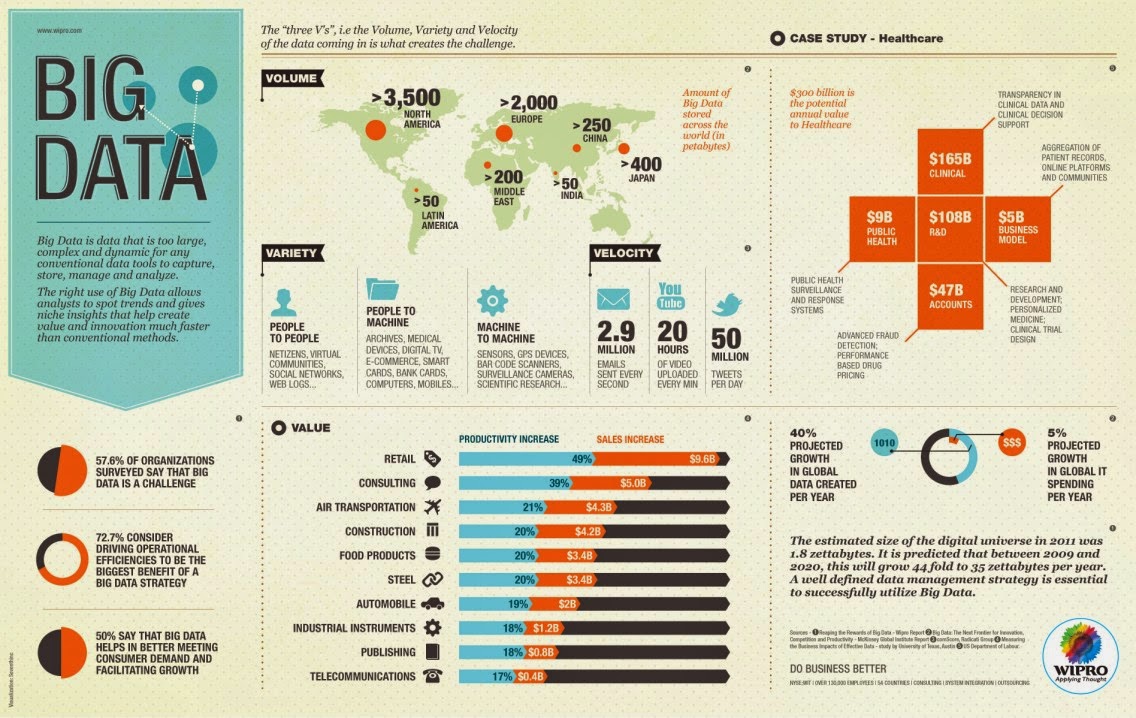
Mobile technologies, sensors, genome sequencing, and advances in analytic software now make it possible to capture vast amounts of information that could transform medicine. The question is: can Big Data make health care better?

In the upcoming Marin Science Seminar, "Big Data and Medical Innovation," Dr. Art Wallace, Chief of Anesthesia Service at the San Francisco VA Medical Center and a Professor of Anesthesiology and Perioperative Care at UCSF Medical Center, will discuss applications of Big Data in medicine and how Big Data has changed epidemiology, quality improvement, and drug discovery. Read the following interview to learn more about Dr. 

Wallace’s thoughts on Big Data and its impact on medical innovation.

Art Wallace, MD PhD

What is Big Data and what is its significance to medicine?  What makes Big Data different from other data that people work with in the healthcare industry?

Big Data is data that is acquired for other purposes that can be analyzed to understand processes, people, and systems. Big Data includes many things: cell phone records, super market purchase card records, credit card records, medical records, internet search terms, medication usage, hospital admissions, social security records, etc. This data can be used for epidemiology to identify associations between factors and outcomes.

Big Data gives additional power to identify factors associated with rare outcomes. I can now easily do a study in 1 million people using data collected for administrative purposes. Doing a study in 1 million patients used to be enormously expensive, now it just requires computer programming and epidemiologic analysis. Before Big Data, the cost of collecting data was prohibitive, so many studies could not be done. With Big Data, there is little to no cost of collecting the data, making the analysis the entire cost for large studies. The profoundly lower costs with Big Data techniques make studies that were previously impossible, possible at minimal cost.

How does Big Data impact professionals in the medical field? Can Big Data be used to improve healthcare?

We have identified factors associated with adverse outcomes, identified medication practices that are associated with increased mortality, identified medications that can reduce morbidity and mortality, and we have identified possible therapies for diseases that have no current therapy. We can reduce morbidity, mortality, cost, and assist in the development of new therapies.
  
Big Data can be used to reduce morbidity, mortality, cost, and improve efficiency. Big Data can be used to ask questions that are morally, politically, technically, socially, ethically, or legally impossible to answer with randomized trials. Big Data is being used to improve quality of life while lowering costs.

Describe how Big Data is reshaping the drug industry?

Big Data can be used to identify medications that reduce or increase risks. Post marketing testing can identify medications that have significant associated morbidity and mortality. For example, we identified a drug that increased mortality risk 5 fold (increased from 3 to 15% with drug use). This use of Big Data led to a medication being taken off the market. It had been used in Europe for 30 years, in the U.S. for 10 years, and it increased the risk of death from 3 to 15%. Big Data was used to identify a very serious risk to patients and led to the medication being taken off the market.

How will Big Data accelerate innovation in medicine?

Big Data will be used to identify new uses of medications. It will identify risk factors for morbidity and mortality. It will lead to further randomized trials.

What are the benefits and dangers of providing Big Data online as the "ever expanding cloud of information" becomes more accessible?

It is easy to identify people from their digital detritus. It is easy to identify very personal things about people from their data trails. Factors such as financial status, interests, sexual orientation, political beliefs, religious beliefs, health status, pre-existing medical conditions, drug and alcohol use, pregnancy status, and proclivities can all be assessed via Big Data. Big Data can be used to manipulate, track, and market to people. At the same time, Big Data can identify very serious risks to patients’ health. Scientific method is an approach; Big Data is a tool. Both can be used for good or bad purposes. Big Data is simply a new and extremely powerful scientific tool.   


Join us Wednesday, February 11th, 2015 to learn more about "Big Data and Medical Innovation" with Dr. Art Wallace from 7:30 - 8:30 PM Terra Linda High School, San Rafael in Room 207.

Friday, February 6, 2015

Big Data and Medicine - Teaser video

Join us Wednesday, February 11th, 2015 at Terra Linda High School in San Rafael for 

Big Data and Medicine 

with Art Wallace MD PhD of UCSF & VAMSC SF

Dr. Wallace will discuss the use of big data in the scientific development of medical care.  He will describe how big data has changed epidemiology, quality improvement, and drug discovery using examples from the U.S. Veteran’s Administration.

Teaser video below by MSS Intern Ben Foehr of Terra Linda High School


Sunday, January 25, 2015

Spring 2015 Marin Science Seminar schedule

Join us for our 8th year of free science learning in Marin!  Six Wednesday evenings per semester from 7:30 - 8:30 pm at Terra Linda High School, 320 Nova Albion, San Rafael, CA 94903

FEBRUARY - Big Data and Medicine

11: "Big Data and Medical Innovation" with Art Wallace MD PhD of UCSF and VAMC SF

25: "Do We Have to Grow Old? The New Science of Aging" with Gordon Lithgow PhD of the Buck Institute, Novato
MARCH - Astronomy & Particle Physics

11: "Snacking, Gorging, and Cannibalizing: The Feeding Habits of Black Holes" with Steve Croft PhD of UC Berkeley

25: "Extra dimensions, mini black holes and.. Pink Elephants?: Exciting times ahead at the Large Hadron Collider" with Lauren Tompkins of Stanford University
APRIL - Ecology & Genetics

1: "From Monkey Flowers to Wild Mice: A Tale of Genes, Adaptation and Extreme Environments" with Katie Ferris PhD of UC Berkeley's Museum of Invertebrate Zoology

8: "Let's Learn About Lysosomes" with Gouri Yogalingam PhD of Biomarin

Monday, December 29, 2014

Spring 2015 Marin Science Seminar internship application period now open

Explore science & technology, meet scientists and medical professionals, gain experience for your resume and college applications, develop a portfolio! Our past interns are now studying at CalTech, UC Berkeley, UC Davis, UC Santa Cruz, Cal Poly SLO, Sonoma State, and CSU Chico. Check out our blog and Vimeo page for examples of past intern blogging and videography. More info. on our internship website.

Apply Online Today or email marinscienceseminar@gmail.com if you are interested in applying. Below is a comparison of the internships currently being offered. Deadline to apply is Friday, January 16th at 5 pm.

Marin Science Seminar Writing Marin Science Seminar Photography &/or Videography
Attend and assist at MSS sessions, 6 Wednesday evenings per semester, 7 - 9pm Attend and assist at MSS sessions, 6 Wednesday evenings per semester, 7 - 9pm
At Terra Linda High School, San Rafael, Room 207 At Terra Linda High School, San Rafael, Room 207
Submit 2 writing samples Submit 2 video samples or photography portfolio
Familiarity with basic blogging interfaces (e.g. Tumblr, Blogger, Wordpress) Able to edit video using video editing software, manage Instagram & Vimeo accounts
Facebook account Facebook account
Training in blogging software provided Recording equipment and SC cards provided
JokeMSS interns attend and assist with a minimum of 6 science seminars per academic year (there are 12 per year) during which they meet the speakers and assist with various logistical duties. Sessions take place on Wednesday evenings at Terra Linda High School, Room 207, during the school year. Interns arrive evening of a session at 7 pm and are free to leave once breakdown is completed (between 8:30 and 9 pm). 

Interns also assist in researching and creating materials about event topics, creating and distributing outreach materials, social networking and online development of Marin Science Seminar’s mission to attract more students to the fields of science, technology and math. Other than attending MSS sessions, duties will depend on student interests and background. Training is provided for some intern tasks.

Sunday, November 16, 2014

Interview with Alex Gunderson, Ph.D: The Price is Wrong


Join us Wednesday, November 19th, 2014 for:

Interview with Alex Gunderson Ph.D.
by Isobel Wright, MSS Intern, Tamalpais HS

How can you compare a game show to climate change and its effect on animals? Well, Alex Gunderson has. Alex Gunderson, Ph.D is a physiological ecologist who specializes in thermal biology and is currently a Postdoctoral Fellow at UC Berkeley. His current research is aimed at answering these questions. How do physiology and behavior interact to influence the vulnerability of ectotherms to climate warming?  How do divergent climatic habitats shape physiological phenotypes, and how does physiological divergence contribute to evolutionary radiations? To answer these questions, he has studied the Caribbean Anolis lizards but is now exploring the crustacean systems. Read the following interview to learn more about his life and work as a physiological ecologist. 


Alex Gunderson, Ph. D.


1.    How did you decide to enter this line of work, as it is so specialized?

I think I gravitated toward biology as a profession because I love being in nature. I grew up in a very rural part of the Midwest where I spent a lot of time outside, on lakes and in the woods. That led me to be interested in how the natural world works.

2. Why did you decide to use the Price is Right as an analogy for the effects of global warming?

The Price is Right was as easy choice for me because it is one of my favorite game shows. When I was in grade school and would get sick and stay home, it was the show I looked forward to watching most. I have always wanted to spin the big wheel!

Anole Lizard
3. What have you learned from working with the Caribbean Anolis lizards?

I have learned a lot! Maybe one of the biggest things is how subtle nature can be. On Puerto Rico there are ten different species of Anolis lizard and to most people they all just sort of look like a generic lizard. But when you look closely, you see that they have evolved all of these small differences that allow them to live and thrive in different habitats. It really is amazing!

4. What level of education do you need to do what you do?

It depends on what your ultimate goal is. You can get paid to do biology with a Bachelors degree, but many positions require graduate degrees like a Master's or PhD. My goal is to be a college professor, so a PhD is required.  

5.  If there was one thing you could tell us to do to prevent climate change, what would it be?

The biggest road-block to making progress on climate change is political inaction, so speak up about it through your vote (if you are 18!), letters to politicians, and outreach activities. On a personal level, there are a lot of things you can do to reduce your contribution to climate change. The Nature Conservancy has a great website where you can calculate your carbon footprint and learn about ways to reduce it: http://www.nature.org/greenliving/carboncalculator/ 

6. What was your biggest Aha moment in life so far, relating to your work?

I think the biggest "Aha" moment I had was when I decided that I wanted to study how animals adapt to different climates. It was my first year as a PhD student, and I was in Puerto Rico for the first time. I thought I wanted to study the evolution of animal signals, or how animals communicate with one another. I had been studying one species in northern Puerto Rico, but I knew the same species also lived in southern Puerto Rico so I decided to drive down there. I was driving south through the mountains with my cousin Neil (he was helping me do my research) and all of a sudden, the landscape changed dramatically. It went from cool, shady tropical rainforest to hot, dry desert in just a few miles. I thought there was no way the same species could live in such different conditions. But sure enough, the same species was there. I wanted to know how they did it, and my fascination with thermal biology was born!

7. What are the best parts of your job? What are the worst parts?

There are two things that I think are best about my job. First, my job takes me amazing places to study amazing animals. Over the years, I have studied lizards in the Caribbean, frogs in the back-country wilderness of Montana, and seabirds in the Galapagos, to name a few. Hard to beat. Second, in many ways, I am my own boss. With some caveats, I get to decide what I study, where I study it, and how I study it. That kind of freedom is hard to come by in many professions.

The worst part of my job? Writing grants. Because most scientific research doesnt generate profits like a business, you have to convince other people to give you money to do it. Those other people are usually government agencies like the National Science Foundation and the National Institutes of Health. Its fantastic that they give the money, but the grant writing itself is often extremely tedious. 

Learn more about Alex Gunderson and his research here


Join us and Learn! 


Interview with Irfan Kathiriya: How to Make or Break Your Heart

By: Sahiti Namburu School: Terra Linda High School Dr. Kathiriya is a pediatric cardiac anesthesiologist and Professor of Anesthesia at t...

About Us

Marin Science Seminar is a one-hour science lecture/presentation with a question and answer period open to all interested local teenagers, educators and community. Seminar sessions are held 12 Wednesday evenings during the school year, from 7:30 to 8:30 pm in the Innovation Hub at Terra Linda High School, 320 Nova Albion Way, San Rafael. Seminar speakers are scientists, mathematicians, engineers, physicians, technologists and computer programmers. The topics presented are in a specific area of the speaker’s expertise, geared to interested high school students.