Tuesday, October 6, 2015

E-Cigarettes: A Subtle Danger?


By Zack Griggy, San Marin HS

          E-cigarettes, or electronic cigarettes, are marketed as a healthier and safer cigarette. But is it really? Multiple organizations, such as the Centers for Disease Control and Prevention and the World Health Organization have found that they are not at all safer that traditional cigarettes.
Newer e-cigarettes sometimes don't resemble
traditional cigarettes at all.
          A traditional cigarette burns the leaves from the tobacco plant. Tobacco is a plant that naturally contains nicotine, the main addictive agent in cigarettes. Nicotine is also used as a strong insecticide and is so strong that a drop of pure nicotine can kill a person. When tobacco is burned, nicotine is released in the smoke. The smoker can then inhale the smoke and experience a high feeling, which is caused by excess levels of dopamine from the nicotine. In addition to

tobacco,cigarettes can also contain thousands of toxic chemicals, the purpose of which could be anything from making cigarettes combustible to enhancing the addictive effects of the nicotine.
          An e-cigarette, on the other hand, vaporizes liquid nicotine, and releases vapor. The process of smoking e-cigarettes was dubbed "vaping" because of this process. The e-cigarette is composed of a cartridge that contains e-liquid, an atomizer that heats the e-liquid, a battery, a sensor that determines when someone is taking a drag and activates the atomizer, and, sometimes, a light that simulates smoking. When a person decides to take a puff of the vapor, the sensor detects this and activates the light and atomizer. The atomizer, once activated, vaporizes the e-liquid and then releases the vapor so it can be inhaled.
E-cigarettes are composed of five parts. The orange section is
composed of the sensor and cartridge. The metallic silver section is the
atomizer. The white section is the battery and light.
          E-cigarettes are widely marketed as a safer way to get high off of nicotine, but the FDA has found that contrary to the marketing, e-cigarettes are not safe. E-cigarettes are not yet regulated by the FDA. This means that e-cigarette manufacturers do not have to list any or all of the nefarious substances found in the e-liquid. So, when someone "vapes," they inhale all sorts of unknown chemicals. With
e-cigarettes, one might be inhaling a few toxic chemicals or a few thousand. However, e-cigarettes are slightly healthier than traditional cigarettes, mainly because e-cigarettes do not result in as much smoke as traditional cigarettes.
          To make matters worse, e-cigarette use is on the rise. E-cigarettes were invented in 2003, but has only recently gained popularity. Now, it is the most commonly used tobacco product in US high schools, and from 2013 to 2014, e-cigarette use among high school students tripled from 660,000 students to over 2 million students. E-cigarette use is clearly a growing problem. Marketing, mostly the TV marketing, was attributed to this recent spike in e-cigarette usage.
          E-cigarettes in spite of their marketing, are not safe products. E-cigarettes contain nicotine, a poisonous chemical, and all sorts of other unknown toxins. Because of marketing, e-cigarette use is increasing. E-cigarettes are slightly healthier than traditional cigarette because there is not nearly as much smoke produced.
       
Sources
1.http://healthliteracy.worlded.org/docs/tobacco/Unit4/1whats_in.html
2.http://www.drugabuse.gov/publications/research-reports/tobacco/what-are-medical-consequences-tobacco-use
3.http://www.nbcnews.com/tech/tech-news/vaping-101-how-do-e-cigarettes-work-n88786
4.http://www.nbcnews.com/health/health-news/5-facts-about-e-cigarettes-fda-no-its-not-ban-n88746
5.http://www.cdc.gov/media/releases/2015/p0416-e-cigarette-use.html

To learn more about e-cigarettes and the risks attributed to them and other important health issues, be sure to join us Wednesday, October 7th, to hear Julie Pettijohn MPH of the California Department of Public Health discuss these important topics at Terra Linda High School, 320 Nova Albion Way, in Room 207 

Sunday, September 27, 2015

Bacteria, Botulism, and Beauty

-->
By Talya Klinger, MSS Intern

The molecular structure of botulinum toxin
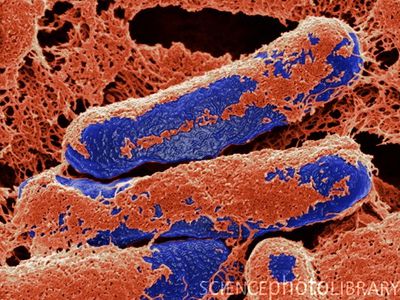
What do foodborne illnesses, neck dystonia treatments, and celebrities’ beauty regimens have in common? Clostridium botulinum, baratii, and other species of Clostridium bacteria produce all of the above and more. These seemingly innocuous, rod-shaped bacteria, commonly found in soil and in the intestinal tracts of fish and mammals, produce one of the most deadly biological substances: botulinum toxin, a neurotoxin that intercepts neurotransmitters and paralyzes muscles in the disease known as botulism. Nonetheless, botulinum toxin isn’t all bad: this chemical not only protects the bacteria from intense heat and high acidity, but it makes for an effective treatment for medical conditions as wide-ranging as muscle spasms, chronic migraines, and, yes, wrinkles. 


C. botulinum
Clostridium botulinum and similar bacteria can make their way into the human body in a number of ways. Wounds infected with Clostridium botulinum or spores ingested by infants can lead to the rare but serious disease of botulism, as can accidental overdoses of medicinal or cosmetic botulinum toxin. Botulism is often foodborne, usually contracted by infants from honey or by adults from improperly home-canned foods and unrefrigerated herb-infused oils. Regardless of where any case of botulism comes from, it causes muscle paralysis, which can manifest as blurred vision, dry mouth, and muscle weakness in adults or lethargy and constipation in infants. These are only early warning signs for an illness that, if left untreated, can paralyze a patient’s respiratory muscles to the point of asphyxiation. Although 95-97% of botulism patients receive treatment and survive, they often require months of intensive care and suffer years of muscle weakness, fatigue, and shortness of breath.

So how does the neurotoxin that makes botulism so deadly work? Clostridium bacteria produce several protein compounds with similar structures and molecular weights, consisting of two chains of amino acids—one small and one large. These two amino acid chains are linked together by a covalent bond between two sulfur atoms, one in each chain. The botulinum toxin proteins bind to nerve endings where they join muscles, blocking the neurotransmitter acetylcholine, which ordinarily causes muscle contractions. This blockage is permanent, paralyzing the muscle until a new nerve ending forms a synaptic connection with it. Because the process of forming new neuromuscular junctions takes at least 2 or 3 months, the affected muscle will often atrophy in the meantime, causing the long-term side effects that plague botulism survivors.

Ironically, the very mechanisms that make botulinum toxin so dangerous give it a wide range of beneficial medical applications. When botulinum toxin is administered in small, controlled doses, its muscle-contraction preventing effects make it a viable treatment for neck dystonia, sustained involuntary eyelid closure, chronic migraines, neurogenic bladder dysfunction, and other conditions caused by involuntary muscle movements. In popular culture and tabloid media, Botox’s serious medical applications are often overshadowed by its cosmetic notoriety: smoothing out wrinkles. Cosmetic Botox inhibits the neuromuscular activity that leads to wrinkles, relaxing the surrounding skin. Seeming to reverse one of the telltale signs of aging may have given botulinum toxin its Hollywood appeal, but its wide ranging pharmaceutical uses are what continue to fascinate research scientists.

In a nutshell, the molecule botulinum toxin is a toxic protein made by clostridium botulinum bacteria. In measured amounts, the toxic protein is marketed as Botox for pharmaceutical uses. When uncontrolled doses of the bacteria are ingested, however, Clostridium botulinum can result in deadly cases of muscle paralysis called botulism. 

 If you are intrigued by the terrible beauty of such a versatile molecule as botulinum toxin, come to Marin Science Seminar on September 30th, at Terra Linda High School, 320 Nova Albion Way, in Room 207 from 7:30 to 8:30 pm, when bioanalysis and pharmacology expert Dr. Erik Foehr will discuss his research on botulinum toxin.

Images:


Saturday, September 12, 2015

An Interview With Dr. Erik Foehr


By Zack Griggy, MSS Intern, San Marin High School, Novato

          In today's world, infectious disease remains a deadly concern to humanity. Some of these diseases include anthrax, Venezuelian equine encephalitis, bubonic plague, MERS, Eastern equine encephalitis, and, of course, botulism. Botulism is a disease that can cause paralysis and even death, but what makes botulism so different from the rest of these diseases is that the substance that causes it, botulinum toxin, is widely marketed as a beauty product under the name Botox. Dr. Erik Foehr, an expert in the fields of bioanalysis, immunogenicity risk assessment, and drug development, is currently investigating the toxin and how the body responds to it. Attend his presentation at Terra Linda High School, 320 Nova Albion Way, in Room 207 from 7:30 to 8:30 pm on September 30th.


In order to gain a little more insight before his talk, we interviewed Dr. Foehr about his work and research.


1. What drew you into the fields of pharmacology and bioanalysis?

I have always enjoyed learning about biology and how living things work.  After high school at Drake, I went to UC Davis and studied genetics and biochemistry.  I eventually worked in the biotechnology industry and specialized in pharmacology and bioanalysis.

 2. What have you studied in the past and how did this lead to your study on botulinum toxin?

I studied cell biology and how cells signal and function. I also spent many years studying immunology.  In my current job I study how botulinum toxin works and test if people develop antibodies to the toxin.

 
3. How is botulinum toxin used in beauty products? How are dangers minimized by these products?

Its a bit crazy to think something so dangerous can be used as a beauty product (it removes wrinkles).  The trick is to use a tiny amount and inject it at the site of the wrinkle. The toxin inhibits the neuro-muscular activity so that the skin looks "relaxed". They are finding other more medically relevant uses of the toxin.

 4. What do you enjoy the most about your work? What do you enjoy the least?

I enjoy learning about the huge number of experimental new drugs being developed for unmet medical needs and helping to study them. Sometimes I would like to spend more time "thinking" and less time "doing".

 5. Do you have any advice for high school students who aspire to be pharmacologists?

Study what interests you and be prepared to be a life-time learner. Science and technology move really fast and you need to adapt and learn on the go. Don't get replaced by robots!


Join us Wednesday, September 30th, at Terra Linda High School, 320 Nova Albion Way, in Room 207 from 7:30 to 8:30 to hear Dr. Foehr talk about his work and his study on botulinum toxin and other lethal diseases. 

Tuesday, September 8, 2015

Chemosynthesis in the Deep Sea

Chemosynthesis In the Deep Sea
by Jane Casto, MSS Intern, Terra Linda High School
     
          The deep sea- where cold, stable pressures and darkness rule. Within that darkness lies life; a broad spectrum of biodiversity. The most fascinating thing about the deep sea, however, lays within what goes against lifeforms on land. 
          On land, plants and animals alike require some form of energy. The same is true in the deep sea, but one thing, particularly about plants, is quite different. Photosynthesis, the process plants use to turn sunlight into usable energy through chlorophyll, is almost always the method that plants use to get said energy. However, in the deep sea, quite a difference can be seen with that process.
          One of the reasons as to why deep sea ecosystems, such as hydrothermal vents, do not use the process of photosynthesis is obvious. Little sunlight reaches that far down into the ocean. With that in mind, however, the question presents itself: how do these ecosystems get their energy?
          Jenna Judge has studied just that. Her research has been following Marine Biology, specifically the deep sea and, our answer, chemosynthesis. Chemosynthesis is the process in which energy is obtained by reactions of inorganic chemicals, occurring within bacteria and other living organisms. 


          "Chemosynthesis also seems to be fueling ecosystems at organic substrates, such as whale falls and wood falls." Jenna said during her presentation, Patterns of Specialization in the Deep Sea, "We found that rather than sunlight fueling this reaction, it's reduced molecules such as sulfide, and in other cases, methane, than can fuel these microbial metabolisms." 
          According to wiseGEEK.org, the process relies on oxidation, or redox reactions. Organisms, namely bacteria and those that belong to the kingdom archea, use chemosynthesis to manufacture food. This food is used as a carbohydrate, made of carbon dioxide and water, rendering it usable for the bacteria just as a carbohydrate would be usable to us. 
          While the deep sea is one of the most extreme examples of chemosynthesis, believe it or not, chemosynthesis is also found on land. The key is that chemosynthesis occurs where sunlight is not present. Therefore it can occur in a variety of places above land, i.e. in soil, in the intestines of mammals, and in petroleum deposits. In fact, some scientists believe that due to the tendency of chemosynthesis to take place in extreme environments, it may feature prominently on other planets depending on weather patterns. 
          The deep sea has many unexplored aspects. It is nice to know that some things are no longer a mystery, and it is also exciting to think about the fact that it is not yet fully explored, leaving room for ventures for years to come.

More on the deep sea at the first seminar of the season, with Jenna Judge.
Wednesday, September 9th, 2015
7:30 - 8:30 pm
Terra Linda High School, San Rafael
Room 207


Saturday, August 22, 2015

An Interview with Dr. Jenna Judge, Marine Biologist

by Talya Klinger, MSS Intern

Driftwood is a common sight on beaches, but what happens to driftwood when it sinks to the seafloor? Dr. Jenna Judge, a recent doctoral graduate of UC Berkeley’s Department of Integrative Biology, researches evolution and ecology in deep-sea habitats, such as driftwood, as well as hydrothermal vents and sunken whale bones. Her research shows that these unusual substrates host diverse, lively communities shaped by the wood they inhabit. Attend her research presentation at Terra Linda High School, Room 207, from 7:30-8:30 pm on September 9th.


In Dr. Judge’s words:


1.   Why did you decide to become a marine biologist in the first place?

Well, I grew up in the mountains, but I was always interested in nature and science. I also loved the beach when my family would go on camping trips to the coast. However, I really decided to pursue marine biology in high school after learning about extreme deep-sea environments and the strange animals that live there from my AP Biology teacher. From there, I looked for colleges that offered a marine biology major for undergraduates and went to UC Santa Barbara. My interests in the ocean and the deep sea in particular were reinforced with each class I took and especially the semester abroad I spent in Australia doing a marine biology program. At the time, the obvious next step for me to take was to apply to graduate school to pursue a career as a marine biologist. While this route has served me well, I usually advise college students to take some time after graduation to explore options before jumping into graduate school. It is a big decision, and it’s important to have a strong sense of yourself and what you want to get out of an advanced program before choosing a program and an adviser.

2.  How did you decide to research driftwood?

I ended up studying sunken wood as a habitat for deep-sea animals after learning that the communities on wood are similar to other deep-sea ecosystems I was initially interested in, but had been much less studied. These ecosystems were hydrothermal vents (basically deep-sea volcanoes), cold seeps, and whale falls, which I’ll explain more about in my talk. Due to a series of conversations with scientists at the Monterey Bay Aquarium Research Institute, I was given the opportunity to test whether the kind of wood matters in shaping animal communities by sinking a bunch of wood at about 2 miles deep and waiting 2 years to see what happened. You’ll see what happened during my talk.

3.   How does your work on communities that form around driftwood relate to other ecosystems?

The experiment I did on sunken wood showed that, like forests and other terrestrial (land) ecosystems, the immediate habitat can act as a filter that shapes the community that colonizes that habitat. This means that the ocean isn’t just a big bathtub with a soup of organisms floating or swimming through it, but that even on small scales, the complexity of a habitat can significantly affect who decides to settle down there. I see all ecosystems as a connected web across the Earth, and I am especially interested in links between the land and the ocean, like wood, but also how the increase in artificial materials like plastic is affecting marine ecosystems.

4.  What advice do you have for high school students who aspire to be biologists?

Follow your curiosity! Ask questions and read about what interests you to keep learning and following your interests. Reach out to people who are doing things you find interesting. Scientists are always happy to hear from people who appreciate what they are doing, and it will help you learn more about what it might be like to pursue certain career paths. And once you have some ideas, research colleges that will support that passion and allow you to fully explore and develop your passion. You might find that the best program for you isn’t at the “top” university in the state or the country. For me, I was only looking at CA schools, and I was really excited about marine biology. So, I focused on applying to schools that had specific aquatic or marine biology majors like UCSB and UCSC, but I did not bother applying to UC Berkeley or UCLA even though they rank higher overall. I encourage you to find a good fit for your interests (and of course a good personal fit!) when choosing a college, and if you don’t have a clear idea about what you want to pursue (most people don’t, I was unusually focused), take your time. If you are looking to pursue marine biology in particular, here is a good site that lists all the programs across states: http://marinebio.org/marinebio/careers/us-schools/.

5.  One final question: do you have a favorite driftwood-dwelling creature?

My favorite wood-dwelling creatures would have to be limpets, since they are what led me to studying sunken wood in the first place. Limpets are snails that have no coil in their shell and a particular group of them are specialized to live in a wide range of deep-sea habitats, including hydrothermal vents, cold seeps, whale falls, and sunken wood. They also  live on empty shark egg cases, crab carapaces, worm tubes, squid beaks, algal holdfasts, and likely other organic substrates that sink to the bottom. 

Join us Wednesday, September 9th, 2015, 7:30 - 8:30 pm at Terra Linda HS, 320 Nova Albion, San Rafael - Room 207 - to hear Dr. Judge talk about her work.  Link to Dr. Judge's Marin Science Seminar profile. 

Tuesday, July 28, 2015

Internship application period for 2015-2016 now open

Marin Teens! (HS & college age) Want a cool fall internship? Check out Marin Science Seminar internships. You can apply online. http://www.marinscienceseminar.com/interns.html

Apply Online for MSS Internships
Fall 2015 Internship dates: Sept. 9 - Nov. 18
Spring 2016 Internship dates: Feb. 10 - Apr. 13

Explore science & technology, meet scientists and medical professionals, gain experience for your resume and college applications, develop a portfolio! 


JokeMSS interns attend and assist with a minimum of 6 science seminars per academic year (there are 12 per year) during which they meet the speakers and assist with various logistical duties. Sessions take place on Wednesday evenings at Terra Linda High School, Room 207, during the school year. Interns arrive evening of a session at 7 pm and are free to leave once breakdown is completed (between 8:30 and 9 pm).
Interns also assist in researching and creating materials about event topics, creating and distributing outreach materials, social networking and online development of Marin Science Seminar’s mission to attract more students to the fields of science, technology and math. Other than attending MSS sessions, duties will depend on student interests and background. Training is provided for some intern tasks.

Below is a comparison of the internships currently being offered. 

Writing or Photojournalism (Photography & Writing) Videography or Film & Photojournalism
Attend and assist at MSS sessions, 6 Wednesday evenings per semester, 7 - 9pm Attend and assist at MSS sessions, 6 Wednesday evenings per semester, 7 - 9pm
At Terra Linda High School, San Rafael, Room 207 At Terra Linda High School, San Rafael, Room 207
Submit 2 writing samples (plus photo samples for Photojournalism) Submit 2 video samples (plus photo samples for Film & Photojournalism)
Familiarity with basic blogging interfaces (e.g. Tumblr, Blogger, Wordpress) Able to edit video using video editing software
Facebook and/or Instagram familiarity Facebook and/or Instagram familiarity
Training in blogging software provided Recording equipment and SC cards & reader provided


Questions?  Contact us.

Wednesday, April 8, 2015

All About Lysosomes

by Angel Zhou, Branson School


Lysosomes, discovered and named by Belgian biologist Christian de Duve, who eventually received the Nobel Prize in Medicine in 1974, are membrane-enclosed organelles that function as the digestive system of the cell, both degrading material taken up from outside the cell and digesting obsolete components of the cell itself. The membrane around a lysosome allows the digestive enzymes to work at the pH they require. In their simplest form, lysosomes are visualized as dense spherical vacuoles, but they can display considerable variation in size and shape as a result of differences in the materials that have been taken up for digestion. Lysosomes contain an array of enzymes capable of breaking down biological polymers, including proteins, nucleic acids, carbohydrates, and lipids.


The lysosome’s enzymes are synthesized in the rough endoplasmic reticulum. The enzymes are released from Golgi apparatus in small vesicles which ultimately fuse with acidic vesicles called endosomes, thus becoming full lysosomes. Lysosomes are interlinked with three intracellular processes, namely phagocytosis, endocytosis and autophagy. Extracellular materials such as microorganisms taken up by phagocytosis, macromolecules by endocytosis, and unwanted cell organelles are fused with lysosomes in which they are broken down to their basic molecules.


Synthesis of lysosomal enzymes is controlled by nuclear genes. Mutations in the genes for these enzymes are responsible for more than 30 different human genetic diseases, which are collectively known as lysosomal storage diseases (LSD). The group of genetically inherited disorders are a type of inborn errors of metabolism caused by malfunction of one of the enzymes. The rate of incidence is estimated to be 1 in 5,000 live births. The primary cause is deficiency of an acidic hydrolase, a hydrolase which functions best in acidic environments. The initial effect of such disorders is accumulation of specific macromolecules or monomeric compounds, affecting the brain, viscera, bone and cartilage the most drastically.


To learn more about how lysosomes can communicate with the rest of the cell to act as recycling centers of cellular waste material in good times and about how lysosomes can act as overly-filled, toxic trash cans in bad times, contributing to cell death and the onset of disease, join us this Wednesday, April 7th for this week's Marin Science Seminar “Let's Learn About Lysosomes" with Gouri Yogalingam, Ph.D. of the BioMarin in Room 207 at Terra Linda High School in San Rafael. 

Interview with Irfan Kathiriya: How to Make or Break Your Heart

By: Sahiti Namburu School: Terra Linda High School Dr. Kathiriya is a pediatric cardiac anesthesiologist and Professor of Anesthesia at t...

About Us

Marin Science Seminar is a one-hour science lecture/presentation with a question and answer period open to all interested local teenagers, educators and community. Seminar sessions are held 12 Wednesday evenings during the school year, from 7:30 to 8:30 pm in the Innovation Hub at Terra Linda High School, 320 Nova Albion Way, San Rafael. Seminar speakers are scientists, mathematicians, engineers, physicians, technologists and computer programmers. The topics presented are in a specific area of the speaker’s expertise, geared to interested high school students.