By Sahiti Namburu, Terra Linda High School
 |
| Illustration of Hazardous Waste and Materials Drawing by Sahiti Namburu |

|
| Illustration of Hazardous Waste and Materials Drawing by Sahiti Namburu |
By Maddie Leung, Redwood High School
What if the key to our future lies in the very land we stand on? Eric Rubenstahl, the Associate Director of Stewardship at the Marin Agricultural Land Trust (MALT), has turned his love for the outdoors into a career focused on land preservation. Land conservation includes various practices aimed at protecting our natural resources, promoting biodiversity, and ensuring that land is used sustainably for future generations. This work involves collaborating with family-owned farms to create conservation easements, encouraging responsible land management, and restoring habitats that support local wildlife. As he addresses the challenges of climate change and urban development, Eric is dedicated to finding creative solutions that balance environmental health with community needs. In this interview, he shares his journey into conservation, the important work MALT is doing to adapt to our changing climate, and how we can all help preserve the landscapes we cherish while supporting thriving communities. Let’s explore what it really takes to protect our land for future generations!

1. What inspired you to pursue a career in land preservation, and what advice would you offer to someone interested in this field based on your previous experiences?
From a young age, the forests and open space that surrounded where I grew up in Connecticut provided strong foundational memories. The trail systems and forested hills served as a place of adventure, learning, and connection to people and place. I wanted to turn my connection with the outdoor world into a career path, so I concentrated my studies during college on environmental science and geography. After graduation, I had several jobs in Utah and Colorado focused on conservation work. After about six years of working, I enrolled in the Conservation Leadership program at Colorado State University. This graduate program was more of a professional track vs. a more traditional research track and helped narrow my career focus to the human dimensions of natural resource management. I would encourage students to enroll in college programs that help develop technical skills for working in conservation and the crucial soft skills of collaborating with people and teams. Programs that train students to work at the nexus of people and the natural environment are becoming more prevalent. Having an internship or finding an entry-level position early in one’s career can be informative and provide insight and context to the world of working in conservation.
2. From MALT's founding in 1980 to today, our understanding of climate change has significantly expanded. Has climate change shaped MALT's work and focus over the last 20 years, and how?
Yes, MALT has a heightened awareness of the shifting climate and threats that result from recent climate trends. For example, increased temperatures and longer periods of drought are events that the community has observed. MALT is working within five pillars that guide our work:
1) Preserve Agriculture
2) Protect Biodiversity
3) Build Climate Resilience
4) Connect our Community and
5) Strengthen the Organization.
These five pillars are all interconnected, but the “Build Climate Resilience” pillar most
.jpg "Marin County landscape") |
| Marin County (Image by Mike McBey) |
3. With MALT's vision of improving both the well-being of the ecosystems in Marin and the financial security of farm operations, are there any instances where these two priorities come into conflict with each other? If so, how have you approached them?
As part of the process of acquiring a conservation easement, MALT creates an Agricultural Management Plan to help understand the carrying capacity of the land. MALT works closely with the landowner and a certified rangeland manager to discuss the agricultural capacity of the landscape. We also discuss what other opportunities exist to help diversify income streams for the ranch. Our goal is to outline a guiding document that harmonizes the ecological, agricultural, and economic goals of the ranch. We promote healthy and diverse ecosystems with thriving wildlife habitats while the producer works the land creating nutrient-rich wholesome food for the region.
4. What does success look like for MALT in ten years? How do you measure success in your field of work?
There are many ways to measure success at MALT. If the community is thriving, growing, innovating and ranches are maintaining healthy agricultural production rates, then MALT is successful. From a programmatic standpoint, if MALT is closing one to three conservation easements per year, we consider that successful land protection. MALT also has a tangible impact through our stewardship grant work. Success can be measured by the amount of dollars invested into ongoing conservation projects or the impact of those projects. For example, how many miles of riparian fence or how many livestock water systems were installed could be two impact-based metrics to measure success. Other forms of success come in softer forms such as the strength of our relationships with the agricultural community, our donors, and the public. Success is measured in how people receive our message and the interaction we have with the broader regional community and beyond. Success is when the public receives a clear, accurate message of our conservation work and when we are fully supporting a thriving and economically stable working landscape in West Marin.
Affordable housing and land conservation are both important for our survival and lifestyle. There are existing systems and policies at the county level that help guide a lot of this work. If those systems and policies are not balanced, or they are not accomplishing the goals, then they should be reevaluated. Zoning is another key factor that can help shape the land use. Historically in Marin County, the area straddling the Highway 101 corridor is flatter and has high-density residential zoning. The steep, hilly topography of the central part of the county serves as a challenge for building affordable housing. In addition, a lot of the land is owned by public agencies such as Marin Municipal Water District and Golden Gate National Recreation Area. At MALT we promote safe agricultural worker housing in good condition to sustain the ranch operation. We also value when structures and homes are clustered. This philosophy could be effective in a broader sense too, where housing is clustered and built in areas that have been identified by the county as smart growth zones.
You can watch Eric Rubenstahl's Marin Science Seminar presentation here: https://vimeo.com/1014183576
To learn more about the fascinating topic of Marin County's land preservation and the Marin Agricultural Land Trust, visit their website at malt.org
Visit marinscienceseminar.com to view upcoming seminars and Eric Rubenstahl's event summary.
Photo of Eric Rubenstahl from malt.org. "Marin County" by Mike McBey is licensed under CC BY 2.0.
By Sahiti Namburu, Terra Linda High School
 |
| A Landscape drawing of land and flowers inspired by the M.A.L.T seminar |
Learn more about the Marin Science Seminar here
by Lorena Salvado, San Marin High School
 |
| Data storage centers |
Big Data, or large data sets are used to train machines and programs (using specific algorithms) to identify and solve problems in our world. Many machine learning algorithms focus on identifying images and recognizing early symptoms of many illnesses, helping patients and doctors alike. Many other algorithms work around predicting our voting and economic futures- each equally important. All of these algorithms are fueled by large data sets, or Big Data, which help train the machine ( or AI) and help it in making more accurate predictions and decisions.
Many researchers, such as Abby Smith who came to Marin Science Seminar and talked about the benefits of Big Data in her talk :“Data Science for Social Good”, use these algorithms to predict and help marginalized communities. These data collections and datasets help many other organizations in determining help to deliver as well as keeping track of the issues within these communities.
So, given that there are many opportunities to help using Big Data, here are 5 different and positive ways Big Data is being used to help those who need it.
1. Tracking and Helping the Homelessness Crisis
One of the main projects Smith worked on, was a predictive and preventative program for individuals that were at close future risk of homelessness in Allegheny County. Her work involved taking data from numerous individuals as well as taking previous homelessness data and patterns and applying it to the current situations. From these programs she can understand who is at a higher risk of near homelessness, and from there the Allegheny County Department of Human Services could intervene and further help these people. This was a very impactful project as it helped many people that were at risk of homelessness.
2. Local data for Local people
The Native BioData Consortium (NBDC) is a database run by Native Americnas focused on gathering information about Native Americans. This big data ranges from public healthy COVID-19 surveillance and tracking to the study and documentation of chronic diseases and effects of medicine. This research and data helps foster trust within these communities as well as incorporate more aspects of their lives into science (by incorporating biological, ecological, sociological factors into the data alongside the data itself). It is also used to encourage and teach future Native American scientists and improve their tribes and communities.
3. Language Preservation and Research
Language preservation has become a big issue in the recent decades. As predicted by UNESCO, 90% of the world’s languages could disappear within the next 80 years. This means that many small indigenous communities will lose their languages, due to assimilation or benign overtaken in importance and significance by outside cultures and languages. Languages are a very important part of culture, with many aspects of the culture being carried by the spoken or written language. To preserve these languages many have launched large Data Science for Good projects, such as Google’s Wallaroo project. These projects collect large data about endangered languages, their syntax, their phonetic sounds, and their cultural importance. Documenting these endangered languages helps us preserve our cultures and use machine learning algorithms to teach it back to future generations, or simply to understand the language patterns better. Another example of language preservation can be seen in the work done for extinct languages. For example, many Native American languages were lost due to colonization and years of forced assimilation. Many of these languages did not have written forms for us to historically trace back and find. Many language based algorithms are using the little oral data that there is on these languages to predict and “fill in” ( phonetically, grammatically ect) what these languages might have sounded like. This helps many historians and Native communities as they have better chances at recovering their languages and cultures.
4. Track and prevent Avian Influenza Risk
During the 2020/2021 Avian influenza outbreak, a team in Korea decided to make a large database containing cases of avian influenza as well as its early stages. This data was later used in many algorithms across the country to help identify and track cases of avian influenza, which helped mitigate the infections and the effects of the illness. Today, with a widespread outbreak of avian influenza going around - with cases even spreading outside of the avian world ( such as cattle and even humans now ! ) large data and algorithms like these are needed. By having a lot of information on the patterns and spread of illnesses, we can better protect our own communities and lessen their spread .
5. Help Businesses target their consumers better
This is by far one of the most widespread uses of Big Data in our current, modern world. Many businesses ranging from social media platforms, to small business, to large companies all seeking to advertise and adapt to their consumer base use some sort of data collection systems to keep track of their consumericus. Many businesses have a certain demographic of people in mind to sell their products to ( ex: A business selling paints will want to market their products to other painters or artists looking for paint ) and collecting big data about individual users on platforms or internet browsing helps these businesses target their advertisements in a more accurate way.
From preventing and tracking homelessness factors, to helping businesses run smoothly and make more profit, to predicting and keeping track of global diseases and preserving and predicting historical and lesser spoken languages, big data and algorithms play a huge role in our world. More and more data is produced every day, and every machine learning algorithm becomes more accurate and more efficient than the last one. These crucial algorithms can help not only our world, in the domains of business, finance, and homelessness, but also the world that we live in, tracking avian flu cases, and predicting natural disasters or helping spaceflights run smoother. And of course, these are just some of the ways that large data sets can be used to help people and improve algorithms. A few more examples can be seen in depth in Abby Smith’s talk at Marin Science Seminar, which can be seen here : "Data Science for Social Good"
More information on Abby Smith’s work: https://marinscienceseminar.com/data-science-for-social-good/ , https://abbylsmith.me/ ,https://www.dssgfellowship.org/
Visit our future Marin Science Seminar talks on the official Marin Science Seminar Website : https://marinscienceseminar.com/
by Lorena Salvado, San Marin High School
Geysers are one of the most fascinating geological phenomenons- with only a few 1000 on our planet, each requires specific conditions of magma streams, water, and geological networks to work. Most of today's geysers were formed 14,000 years ago- after the last glacial era of our planet. They operate under very intricate conditions-with lots of mystery around their exact workings, which is why Mara Reed became intrigued by them. Reed is a Ph.D. candidate at UC Berkeley's Department of Earth and Planetary Science, and she works at geyser sites - mainly in Yellowstone National Park- spending her days researching and collecting data. She came to Marin Science Seminar on Wednesday February 7th, 2024 and gave a talk about the current research concerning geysers as well as their importance. In this interview, she will share a few tidbits about her work and give some advice.
 |
| Mara Reed |
I enjoy hikes to the edge of Shoshone Geyser Basin in Yellowstone’s backcountry. If you hike in June or July, you’ll see incredible wildflowers along the way. It can be done as a long day hike (18 miles round trip) but most people choose to backpack. The trail passes by some interesting geyser formations. Just be sure to stay on the path, for your safety and the protection of the thermal features.
How much of your time is spent out in the field versus in the lab, which part do you like more?
I actually do my best to stay out of the lab! Most of my work involves spending just a couple weeks in the field every year, and then spending the rest of the time managing, analyzing, and writing about the field data. I find the lab work that relates to water chemistry or rock properties very “fiddly,” and would rather be outside.
How does geothermal energy collection affect geysers (In Iceland or other locations)?
There is almost always a negative effect, whether from large scale power production (like in Iceland and the US) or from smaller scale heating (like in New Zealand). Geysers need water and heat to operate, and geothermal wells can take both of those things away. The US once had a few geyser fields in Nevada, including significant ones at Beowawe and Steamboat Springs, but geyser activity declined and then ceased after geothermal power production started. I think geothermal energy is necessary if we want to get away from fossil fuel reliance but I do hope the world’s remaining geyser fields stay protected.
Do you think that knowledge of geysers on planet earth could affect our developments or research on other planets ( i.e. Mars or the Moon)?
We do find geyser-like features on other solar system bodies, including Enceladus (moon of Saturn) and Europa (moon of Jupiter), but we think they form and operate differently than geysers on Earth. I think hydrothermal areas and geysers are good laboratories to study how life lives and even thrives in extreme environments. We now know that there are microorganisms that live directly inside Old Faithful Geyser’s vent, which is pretty incredible. Understanding the present day life that exists in these environments can help us understand how life formed on our planet and where we might look for life elsewhere in the solar system.
How can the public help with geysers or geyser research?
We are very fortunate to have the world’s most concentrated geyser field in our backyard. The biggest thing people can do is to be a good steward of these areas. For visitors to Yellowstone, that means following the rules—keep to the trails and don’t mess with the geysers. It’s not just a safety thing. Geyser formations and bacteria mats are extremely delicate. Damage can be permanent. For anyone really interested in geysers and contributing to geyser monitoring, I would recommend reaching out to the Geyser Observation and Study Association (GOSA) for resources and tips on getting involved. Most geysers are still not monitored by scientific equipment, so visual observations of geyser activity are still a very important resource for scientists.
What's a piece of advice you would give to someone wanting to pursue a career in geyser research?
Since geyser science intersects with many different fields, it’s helpful to have a broad knowledge base. A solid foundation in physics, chemistry, and hydrogeology will serve you well. For those interested in pursuing scientific research in general, there are many opportunities at the college level. Some universities have strong undergraduate research programs (this is something to think about when choosing where to apply to college), but you can also apply for Research Experiences for Undergraduates (REU) programs where you can get paid to do research, usually over the summer at a certain university. Early exposure to research helps you figure out if you like doing it and what research questions interest you.
 |
| Lion Geyser picture by Mara Reed |
You can watch Mara Reed's Marin Science Seminar presentation here, "Getting a Grip on Geysers" with Mara Reed, Ph.D. candidate at UC Berkeley’s Department of Earth and Planetary Science
You can learn more about Mara Reed and her work here : https://www.marareed.com/
As well as check out her awesome photography here : photography
License for all photos used : license
And additional information used in this article can be found here , "USGS How do Geysers Work"
by Julia Owens, San Marin High School
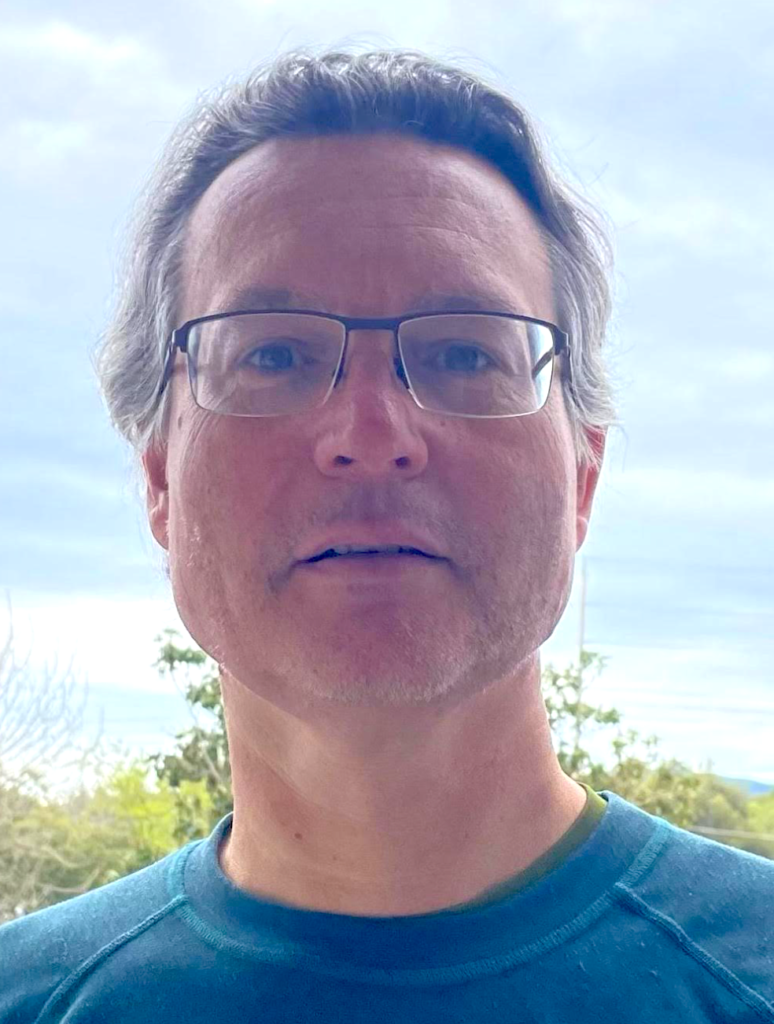 |
| Dr. Wolfgang Schweigkofler |
It is hard to find someone who has not watched a movie with aliens. ET? How about Walle-E? Star Wars probably counts. There are enthusiasts of extraterrestrial life and fanatics for the uncanny, yet there is not a lot of regard towards the aliens all around us.. likely in an ecosystem near you! Invasive organisms join the dark side to terrorize and wipe out native species. Oak trees, for example, are threatened by the pathogen "Phytophthora ramorum," which is researched by Dr. Wolfgang Schweigkofler at Dominican University. Dr. Schweigkofler presented about this pathogen to Terra Linda High School's Innovation Hub in San Rafael, California on March 20, 2024. We interviewed him to find out about his experience as a plant pathologist, professor, and scientist.
Nola Palestrant, Tamalpais High School
In 1928, Sir Alexander Fleming accidentally discovered humanity’s first antibiotic, Penicillin, which would come to revolutionize medicine. Antibiotics are a type of medicine that fight infections caused by bacteria. Bacteria are prokaryotes - single-celled organisms that lack a nucleus or other membrane-bound organelles. They were the first life forms to appear on earth, and have been interacting with humans since the dawn of our existence. Bacteria infect us in a variety of ways, including by penetrating our skin, riding in airborne particles that we inhale, residing in the food we eat, and transmitting through contact with vectors. Once inside our bodies, they rapidly reproduce, invading our cells to survive and grow, and sometimes releasing toxins. Though not all bacteria are harmful, those that are can infect almost every part of our bodies. Antibiotics function by killing bacteria outright or disabling their growth. Before the invention and widespread use of antibiotics, many infections were fatal, especially in vulnerable population groups. We can now cure most of them easily and are even able to prevent certain bacteria from causing harm through the use of vaccines. Antibiotics have been instrumental in allowing us to live longer and healthier lives. Here are some medical problems that were deadly in a pre-antibiotic era, but are now largely treatable with the use of antibiotics.
Strep Throat
 |
| Group A Streptococcus (GAS), the bacteria that typically causes strep throat |
Tuberculosis
Bacterial Meningitis
Bacterial Meningitis is a severe infection in the meninges - the three membranes that line the brain and the spinal cord. They protect the central nervous system, and in the case of meningitis, become inflamed. While meningitis can be caused by both viruses and bacteria, bacterial meningitis tends to be more harmful.
The bacterium that typically cause bacterial meningitis is streptococcus pneumoniae, neisseria meningitis, listeria monocytogenes, and staphylococcus aureus. These bacteria don’t specifically attack your meninges. As they infect other parts of your body, they cause infections there, each with its own unique complications. They result in meningitis by chance, and when they do, these bacteria can have detrimental effects.
Meningitis is frequently accompanied by sepsis, a serious condition that results in multiorgan failure and shock. Sepsis is often fatal.
Even when bacterial meningitis is not deadly, it can cause strokes and significant brain damage, leaving victims with issues such as memory problems, learning disabilities, seizures, movement disorders, and paralysis.
Even with the assistance of antibiotics, 1 in 10 people who contract bacterial meningitis will die, and 1 in 5 will experience serious complications. However, in the pre-antibiotic era, the mortality rate for bacterial meningitis was nearly 100%. Medical advances have enabled us to treat and prevent such infections through vaccination and cleanliness.
4. Childbirth
More than three million babies are born every year in the U.S., yet 1,000 mothers will die from childbirth. Five infants in every 1,000 births won’t survive. However, up until the 1930s, mothers and babies routinely perished in childbirth.
In the late 18th century, maternal death rates were estimated to be about 25 per 1,000 women. Because of the high total fertility rate (average number of children a woman bears), the likelihood of childbirth complications was significant. Sepsis, a condition where the body improperly responds to an infection, was the cause of half of these deaths. Accounting for another large portion of deaths were uterine infections that led to Puerperal fever.
British doctor Irvine Loudon described puerperal fever; “A woman could be delivered on Monday, happy and well with her newborn baby on Tuesday, feverish and ill by Wednesday evening, delirious and in agony with peritonitis on Thursday, and dead on Friday or Saturday.”
In 1900, one in every six American infants died before their first birthday. Infections were a primary contributor to this number. Death rates for mothers and infants dropped when antibiotics were developed, able to combat the bacteria responsible for so many deaths. A decreased maternal and infant mortality rate played a large role in enabling a spike in population growth. Without the development of antibiotics to lower the fatalities associated with childbirth, bringing new life into the world would be very different.
General Infections
 |
| Staphylococcus aureus, the bacteria responsible for several infections Works Cited |
“\/.” YouTube, 16 June 2023, https://www.uptodate.com/contents/epidemiology-of-community-acquired bacterial-meningitis-in-adults/print. Accessed 23 November 2023.
“Bacterial Meningitis: Causes and How It's Spread.” Healthline, 7 June 2016, https://www.healthline.com/health/bacterial-meningitis-causes-and-how-they-re-spread. Accessed 23 November 2023.
“Easy to treat now, but not in 1900.” The Independent, 24 November 2000, https://www.independent.co.uk/life-style/health-and-families/health-news/easy-to-treat-now-but-not-in-1900-622045.html. Accessed 23 November 2023.
“Escherichia coli (E. coli) - MN Dept. of Health.” Minnesota Department of Health, 5 October 2022, https://www.health.state.mn.us/diseases/ecoli/index.html. Accessed 23 November 2023.
“Group A Strep Fact Sheet.” CDPH, https://www.cdph.ca.gov/Programs/CID/DCDC/CDPH%20Document%20Library/GASFactSheet.pdf. Accessed 23 November 2023.
Gunawardhana, Nuwan, and Sophia Smith. “Meningitis: Symptoms, Causes, Types, Treatment, Risks, Vaccine.” Healthline, https://www.healthline.com/health/meningitis. Accessed 23 November 2023.
“The History of Antibiotics - The History of Antibiotics.” HealthyChildren.org,15 November 2019,https://www.healthychildren.org/English/health-issues/conditions/treatments/Pages/The-History-of-Antibiotics.aspx. Accessed 23 November 2023.
“History | World TB Day | TB.” CDC, 18 October 2023, https://www.cdc.gov/tb/worldtbday/history.htm. Accessed 23 November 2023.
Hoyert, Donna L. “Maternal Mortality Rates in the United States, 2021.” CDC, 16 March 2023, https://www.cdc.gov/nchs/data/hestat/maternal-mortality/2021/maternal-mortality-rates-2021.htm. Accessed 23 November 2023.
Murrell, Daniel. “Bone Tuberculosis: Symptoms, Causes, and Treatment.” Healthline, 27 August 2018, https://www.healthline.com/health/bone-tuberculosis#symptoms. Accessed 23 November 2023.
Murrell, Daniel. “Bone Tuberculosis: Symptoms, Causes, and Treatment.” Healthline, 27 August 2018, https://www.healthline.com/health/bone-tuberculosis#symptoms. Accessed 23 November 2023.
Nardell, Edward A. “Miliary Tuberculosis (TB) - Infections.” Merck Manuals,
https://www.merckmanuals.com/home/infections/tuberculosis-and-related-infections/miliary-tuberculosis-tb. Accessed 23 November 2023.
Sealey, Toby. “Life before antibiotics (and maybe life after an antibiotic apocalypse).” BBC, 19 November 2015, https://www.bbc.com/news/newsbeat-34866829. Accessed 23 November 2023.
“Syphilis: The Facts.” CDC, https://www.cdc.gov/std/syphilis/the-facts/syphilis_bro_508.pdf. Accessed 23 November 2023.
“TB meningitis | Meningitis Now.” Meningitis Now, https://www.meningitisnow.org/meningitis-explained/types-of-meningitis/tb-meningitis/. Accessed 23 November 2023.
“Tuberculosis - Symptoms & causes.” Mayo Clinic, 22 March 2023, https://www.mayoclinic.org/diseases-conditions/tuberculosis/symptoms-causes/syc-20351250. Accessed 23 November 2023.
Images:
https://www.flickr.com/photos/microbeworld/5957846000
By: Sahiti Namburu School: Terra Linda High School Dr. Kathiriya is a pediatric cardiac anesthesiologist and Professor of Anesthesia at t...


